
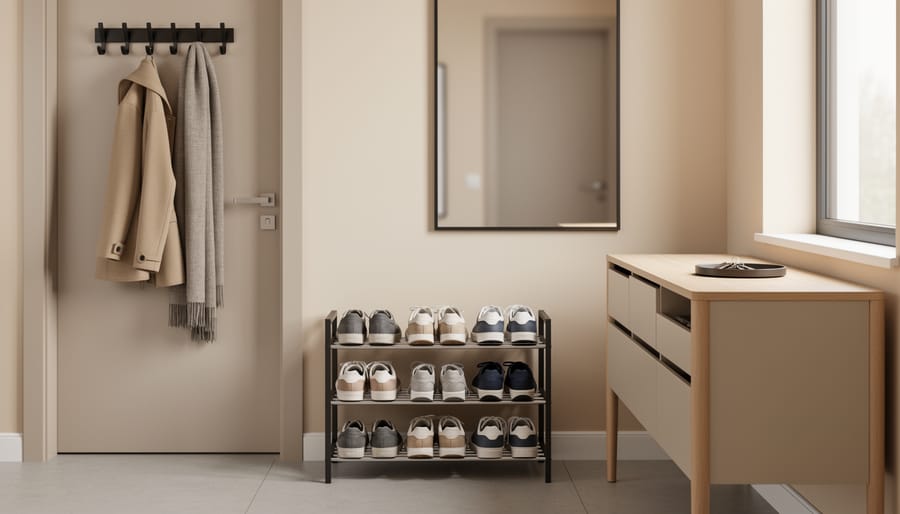
10 Rental-Friendly Entryway Storage Solutions That Won’t Cost You Your Deposit
The best rental-friendly entryway storage solutions work without drilling or permanent hardware, relying instead on over-the-door racks, freestanding furniture, adhesive hooks, and modular organizers that keep security deposits intact while maximizing function. Renters face a unique challenge: entry spaces are often cramped, awkwardly shaped, and strictly off-limits for wall anchors or screw-in shelving. Yet shoes pile up, coats need homes, and keys vanish into the void.
The good news? You don’t need permission from a landlord to transform a cluttered entry into an organized welcome zone. Today’s market offers dozens of damage-free storage options across every budget, from under-$10 shoe racks to $100 console tables with hidden compartments. We’ve worked with professional organizers and interior stylists to identify the criteria that matter most: true no-drill installation, stability without wall mounting, easy removal when you move, and genuine storage capacity for real-life chaos.
In this guide, you’ll find ten rental-safe entryway solutions currently available in 2026, spanning ultra-affordable picks to premium pieces. Each recommendation includes confirmed pricing, specific installation methods, and the kinds of items it handles best. Whether you’re working with a narrow apartment hallway or a standard-width foyer, these options deliver the storage you need without the risk.
How We Chose These Rental-Friendly Storage Solutions
We didn’t just grab the first entryway products we found. Every solution in this guide passed strict renter-specific criteria, developed in collaboration with certified interior designers who specialize in small-space organization. We focused on practical solutions that protect your security deposit while actually solving storage problems.
Our selection process prioritized:
- Damage-free installation methods requiring no drilling, nails, or permanent wall changes
- Clean removal that leaves walls, doors, and floors intact when you move
- Price accessibility ranging from under $10 to $100 to fit various budgets
- Space efficiency that works in tight studio entryways and larger apartment foyers alike
- Design versatility that complements different decorating styles without looking temporary
We cross-referenced current bestseller rankings with verified pricing data to ensure these items are actually available in 2026, not discontinued products or outdated recommendations. Each pick also had to excel at no-drill storage while maintaining stability and function. The result is a curated list where every item earns its place through proven renter-friendliness, not just popularity.
1. Over-the-Door Shoe Organizer: Maximize Vertical Space
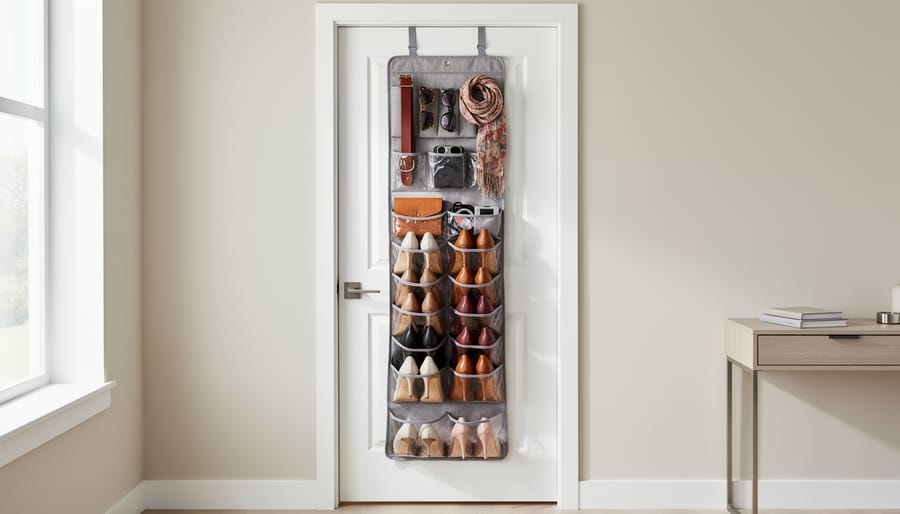
Over-the-door shoe organizers deliver immediate vertical storage without touching your walls or losing a penny of your security deposit. The UVIAHOMI 20-30 Pairs Over the Door Shoe Organizer (currently priced at $25.98) hooks over any standard door and instantly creates dedicated spots for multiple pairs of shoes, keeping them visible and preventing the dreaded morning hunt through entryway piles.
These organizers work by hanging from sturdy metal hooks that fit over the top of most interior doors, eliminating the need for drilling or adhesive. The clear pockets let you see what you own at a glance, which actually helps you wear more of your shoe collection instead of forgetting what’s buried at the bottom of a closet. Most models accommodate various shoe sizes in each pocket, from flats to sneakers, though bulky boots typically won’t fit.
The versatility extends beyond footwear. Use the lower pockets for shoes and upper ones for winter accessories like gloves, scarves, or hats. Small pet supplies, charging cables, or cleaning products also work well if you need general entryway organization beyond just shoes.
For tighter budgets, 24-pocket versions run under $16 and still provide substantial storage capacity. The higher-capacity UVIAHOMI model justifies its price with reinforced stitching and more durable pocket construction that withstands daily use without sagging. Either option moves with you to your next rental and leaves zero trace behind, making them one of the safest deposit-protecting choices you can make.
2. Freestanding Shoe Rack: Simple and Budget-Friendly
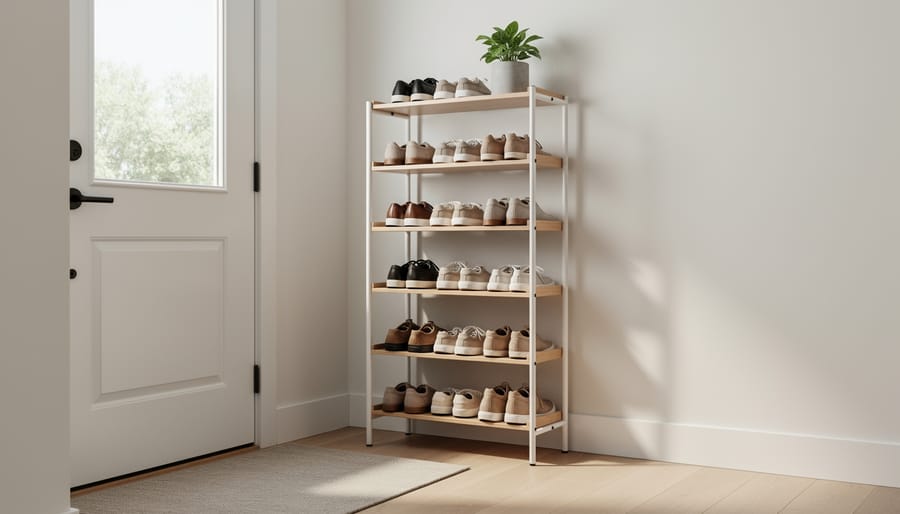
At under $10, freestanding fabric shoe racks represent the most budget-friendly entry point into organized entryway storage. The Kitsure Shoe Rack tops Amazon’s bestseller list in 2026 at just $9.99 for its 3-tier, 27.5″ wide black model, proving that rental-friendly doesn’t mean expensive.
These non-woven fabric racks assemble in minutes without tools, typically using simple pole-and-connector systems that snap together. You can set one up while your coffee brews, then move it just as easily when you rearrange or relocate. The lightweight construction means you’re never committed to a single spot, unlike permanent shelving solutions that require drilling.
The compact footprint fits narrow entryways, hallway corners, and even closet floors where wall-mounted options won’t work. Most 3-tier models hold 9-12 pairs of adult shoes depending on size, while the breathable fabric prevents moisture buildup that can damage shoes stored in enclosed spaces.
For renters watching every dollar, these racks deliver serious value. They’re sturdy enough for daily use but disposable enough that replacing one after a few moves won’t strain your budget. Keep weight distribution even across tiers to prevent tipping, and consider the vertical clearance if you’re storing boots or high-tops on lower shelves.
3. Adhesive Floating Shelf: Display Without Drilling
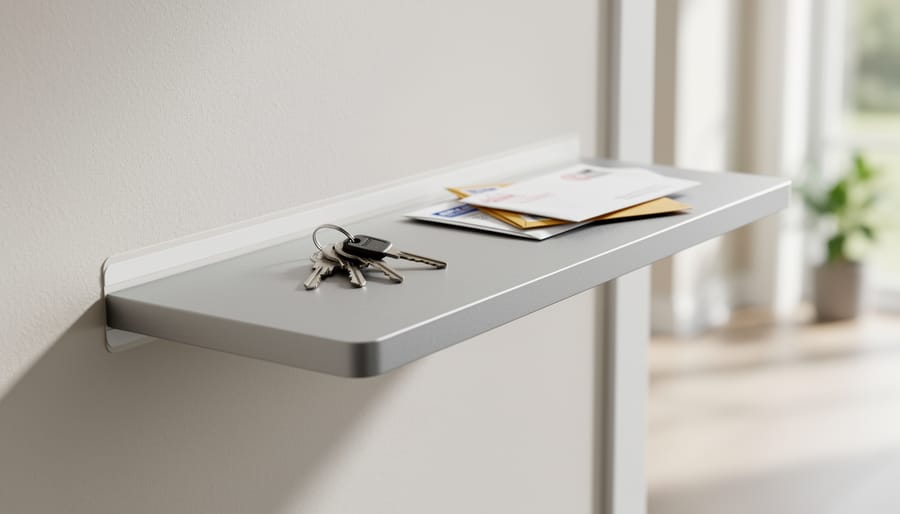
Adhesive floating shelves offer renters a clever way to add surface storage for everyday essentials without touching your walls with a single screw. These lightweight shelves stick directly to painted walls, tiles, or smooth surfaces using removable adhesive strips, creating a designated drop zone for keys, sunglasses, mail, and small decorative touches that complement 2026 decor trends. With options available for under $22, they’re among the most affordable rental-friendly storage solutions you can find.
Most adhesive shelves handle between 5-10 pounds when properly installed, enough for lightweight everyday items but not heavy books or large decorative objects. They work best on smooth, clean surfaces like painted drywall, glass, or sealed wood. Textured walls, recently painted surfaces (wait at least a month), and porous materials reduce adhesive effectiveness significantly.
Installation takes minutes: clean the wall with rubbing alcohol, let it dry completely, apply the adhesive strips to the shelf backing, press firmly against the wall, and wait the recommended bonding time before adding items. When you move out, most quality adhesive strips remove cleanly by pulling down slowly and steadily at a 90-degree angle. This damage-free removal protects your security deposit while giving you functional storage that actually looks intentional rather than makeshift.
4. Wall-Mount Key and Mail Rack with Adhesive Backing
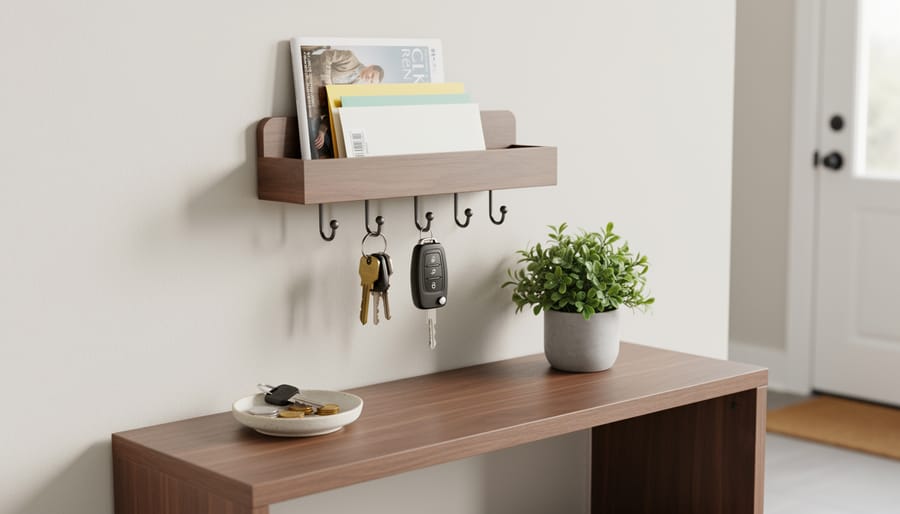
A wall-mounted key and mail organizer with adhesive backing eliminates the frantic search for car keys and keeps incoming mail from becoming counter clutter. These compact organizers stick to smooth surfaces like painted walls, doors, or tiles using 3M strips or similar damage-free adhesives, making them ideal when drilling isn’t an option.
The best placement is within arm’s reach of your door, typically 48-60 inches from the floor. This height works for most household members while keeping items visible as you walk in. Test the wall surface first with a small piece of adhesive to ensure compatibility, especially on textured or freshly-painted walls where adhesion might be weaker.
Design options range from minimalist wooden trays with key hooks to multi-compartment organizers featuring mail slots, small shelves for sunglasses, and multiple hooks for different key sets. Some include small chalkboards or whiteboards for notes, while others incorporate decorative elements that double as entryway decor.
The real payoff comes on rushed mornings. When your keys always return to the same spot and yesterday’s mail has a designated home, you skip the couch-cushion excavation and countertop paper shuffle. Most quality adhesive organizers hold 5-10 pounds, enough for several key rings and a week’s worth of mail, and remove cleanly when you move out.
5. Rattan Entryway Table: Style Meets Function
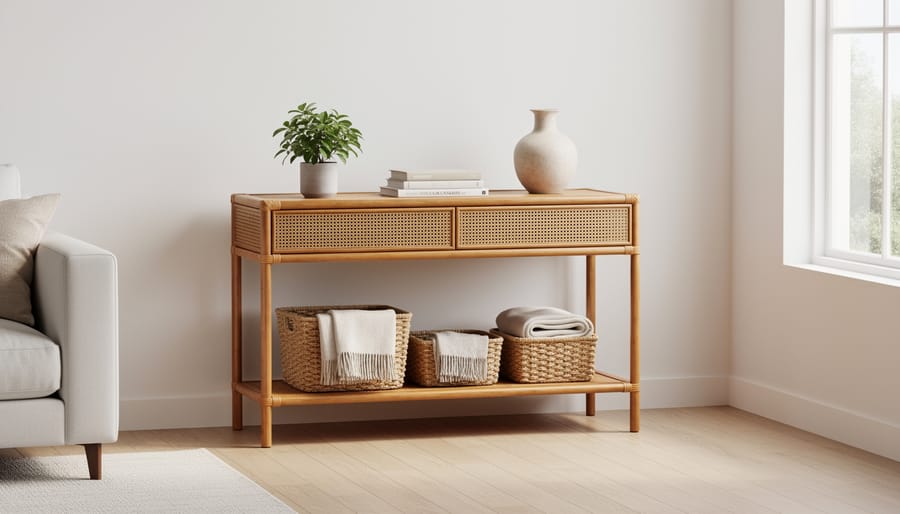
A freestanding console table brings sophistication to your entryway while keeping your walls pristine. The Superjare Rattan Entryway Table stands out at $99 (reduced from $120) as a rental-perfect solution that delivers both surface and underneath storage without requiring a single screw.
These tables typically measure around 30 to 40 inches wide, making them ideal for entryways with at least three feet of wall space. The top surface becomes your landing pad for keys, mail, and a decorative tray, while the lower shelf accommodates storage baskets or attractive bins for gloves, dog leashes, or reusable shopping bags. Rattan designs add textured warmth that complements most rental finishes without committing to a specific color scheme.
Look for tables with stable four-legged construction rather than wobblier two-point designs. The legs should sit flush on the floor, and the unit shouldn’t require wall anchoring for stability. This matters when you’re loading the surface with everyday essentials or heavier decorative objects like table lamps or ceramic bowls.
Position your console table against the longest uninterrupted wall in your entryway, leaving at least 24 inches of clearance for comfortable passage. In narrow spaces under 36 inches wide, skip the console entirely and opt for wall-mounted or door-hanging solutions instead. The investment makes sense if you have room to walk around it comfortably and appreciate having a proper drop zone that feels like furniture, not just storage.
6. Freestanding Storage Bench: Seating Plus Hidden Storage
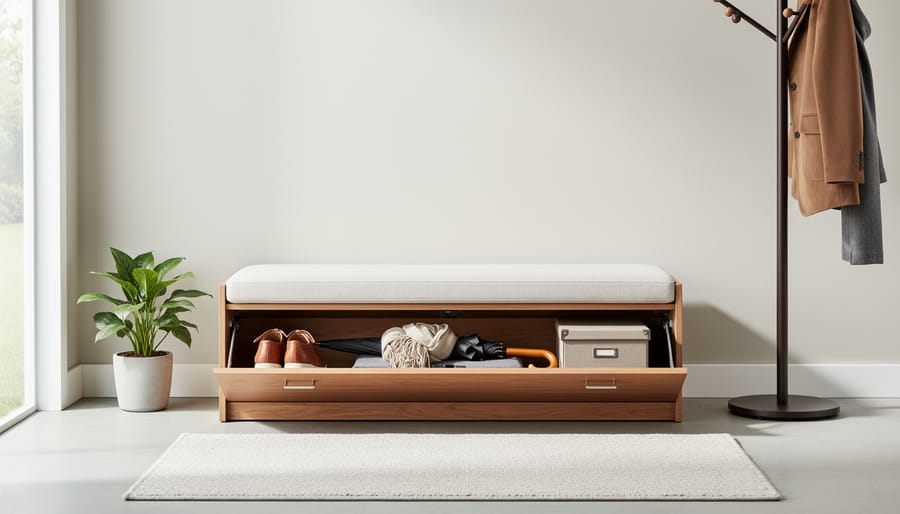
A freestanding storage bench solves two problems at once: it gives you a place to sit while putting on shoes and hides clutter inside. Most benches offer cubbies or lift-top compartments that swallow shoes, bags, or seasonal items, keeping your entryway looking tidy without a single screw or anchor.
Weight capacity matters more than you might think. If you plan to actually sit on the bench daily, look for models rated for at least 250 pounds. Cheaper particle-board benches might wobble or sag over time, while solid wood or metal-frame options handle regular use better. Test stability in the store if possible, or check reviews for mentions of sturdiness.
Cushioned tops offer comfort when you’re lacing up boots, but hard-top benches double as display surfaces for plants or baskets. Cushioned versions work well in family entryways where multiple people sit each day. Hard tops suit minimalist spaces or those who need extra surface area more than seating comfort.
These benches fit both small and larger entryways because they come in various widths, typically from 30 to 48 inches. Measure your space first, leaving at least 18 inches of walkway clearance on one side. In a narrow entryway, position the bench against the longest wall. In a larger space, you can float it as a room divider or place it opposite the door for a welcoming focal point. Since these are freestanding, you can rearrange anytime without patching walls.
7. Fabric Drawer Dresser: Soft Storage for Small Spaces
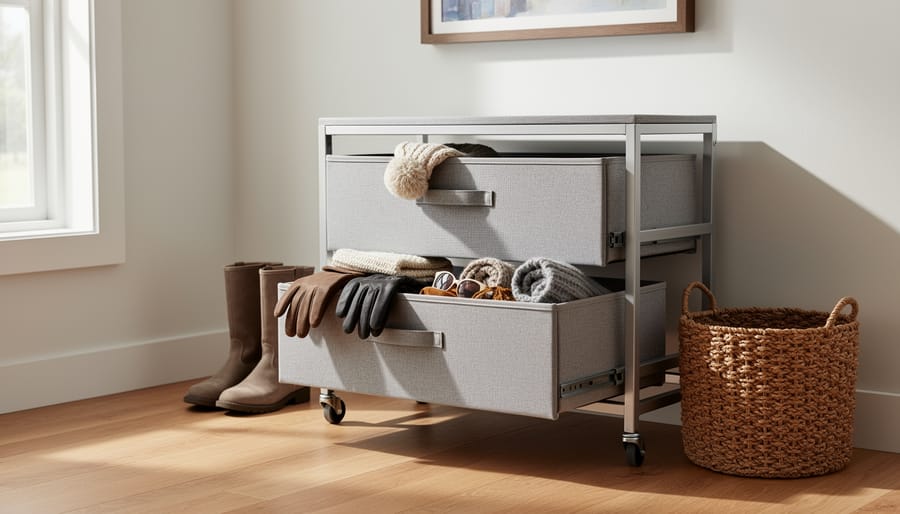
Fabric drawer dressers bring soft-sided versatility to entryway storage without the weight or permanence of traditional wood furniture. The SONGMICS 5-drawer fabric dresser ($42.99) currently ranks among the top entryway solutions for good reason: it’s light enough to reposition easily, gentle on floors, and moves with you to your next rental without the hassle of disassembling heavy furniture.
This type of dresser shines when storing items you reach for daily but don’t want cluttering surfaces. Use the top drawers for gloves, scarves, and winter accessories, middle drawers for dog leashes, pet waste bags, and grooming supplies, and bottom drawers for reusable shopping bags or seasonal items like sunscreen and bug spray. The fabric construction means you won’t damage walls if you bump it while carrying groceries, and there’s no risk of scratching rental floors.
Assembly typically takes 20 minutes or less with straightforward instructions and minimal tools. The steel frame provides stability while keeping the overall weight manageable for one person to move. Before buying, measure your entryway width and depth carefully. Most fabric dressers need about 10 to 12 inches of depth and 24 to 30 inches of width, so they work better in entryways with at least three feet of clear floor space rather than narrow hallways.
8. Dirt-Trapper Door Mat: First Line of Defense
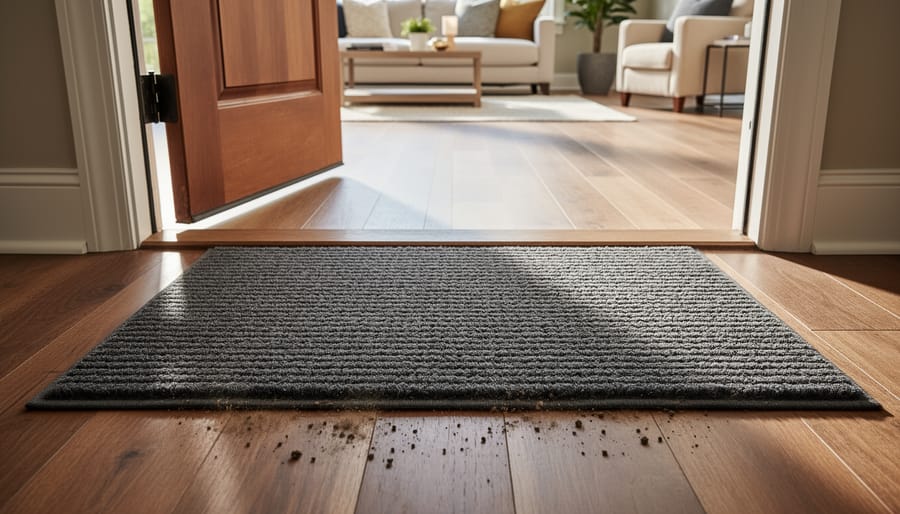
A quality door mat isn’t just about wiping your feet, it’s your first defense against tracked-in dirt, moisture, and the floor damage that could eat into your security deposit. The BEQHAUSE Dirt Trapper Door Mat (20″ x 32″, $17.99) currently ranks among Amazon’s best-selling entryway furniture for good reason: its absorbent microfiber surface captures debris before it spreads through your apartment, while the non-slip rubber backing stays put on tile, hardwood, and laminate without adhesives or installation.
High-performance mats like this one drastically cut the time you’ll spend sweeping and mopping your entryway, which matters when you’re trying to keep rental floors pristine. The textured surface scrapes dirt from shoe treads more effectively than basic carpet remnants, and the machine-washable design means you can refresh it whenever it looks worn. Choose a mat in a neutral gray or beige that hides everyday grime, or go bold with a pattern that complements your French country style or modern aesthetic, either way, you’re creating a visual boundary that defines your entryway zone and signals “shoes off here” to guests.
For narrow entryways, a runner-style mat works better than a standard rectangle, while double-door entries benefit from larger 3′ x 5′ options that cover more ground.
9. Leaning Ladder Shelf: No-Drill Vertical Storage
Leaning ladder shelves bring vertical storage to your entryway without touching the walls. These angled shelves rest against the wall at the top while their wider base sits firmly on the floor, creating a stable structure that requires zero installation. You get multiple tiers of storage space that work beautifully in narrow entryways where traditional furniture won’t fit.
Stability depends on proper placement and weight distribution. Position your ladder shelf against a flat wall section, not near a door swing path. Keep heavier items on the lower shelves and lighter decorative pieces up top. Most ladder shelves have rubber feet or felt pads that grip the floor and protect it from scratches.
Style these shelves with a mix of open and closed storage. Use woven baskets on the middle shelves for gloves, scarves, and dog-walking supplies. The top shelf works perfectly for keys and mail in a small tray, while the bottom tier can hold your everyday shoes or a catch-all basket. This combination keeps clutter hidden while displaying a few decorative touches like a small plant or framed photo.
The beauty of ladder shelves in rentals is their portability. They move easily from room to room and apartment to apartment, making them a smart investment that adapts to your changing spaces without leaving a single mark behind.
10. Freestanding Mirror with Hooks: Functional Focal Point
A freestanding mirror with built-in hooks combines two essential entryway functions without requiring a single nail or screw. These versatile pieces lean against your wall, providing a last-minute outfit check while offering coat, bag, and scarf storage on integrated hooks. For renters, they’re particularly valuable because they completely eliminate wall damage while making small entryways feel more spacious through strategic reflection.
Full-length leaning mirrors with hooks create an instant drop zone for daily essentials. Position one near your door, and you’ve got a natural spot to hang jackets, toss bags, and ensure you’re presentation-ready before heading out. The reflective surface bounces light around cramped spaces, making narrow entryways feel wider and brighter. Some models feature decorative frames that double as style statements, transforming functional storage into an attractive focal point.
When selecting a freestanding mirror for renter-friendly storage consider both weight distribution and hook placement. Look for wider bases that prevent tipping when you hang heavier coats. Position the mirror on a stable, level surface away from high-traffic swing zones where it might get knocked. Many designs include rubber feet or felt pads that protect your floors while keeping the mirror steady, another deposit-saving detail your future self will appreciate.
Making the Most of Your Rental Entryway
Start by measuring your entryway’s width, depth, and wall space before buying anything. Knowing you have 24 inches versus 36 inches to work with will prevent costly returns and help you choose solutions that actually fit. Snap a quick photo with a tape measure in frame so you can reference it while shopping.
Create distinct zones even in tight quarters by stacking solutions vertically. An over-the-door organizer handles shoes up high while a slim console table or fabric dresser sits below for keys and mail. Pair a freestanding mirror with a nearby shoe rack to build a functional getting-ready station without drilling a single hole.
Test any adhesive products on a hidden area first, like inside a closet door or behind furniture. Let it sit for 24 hours, then remove it to check for residue or damage. This five-minute test can save your entire security deposit and gives you confidence that your chosen solutions will leave no trace when you move.
Frequently Asked Questions
Can adhesive solutions damage paint when I move out?
High-quality adhesive mounting products designed for renters typically remove cleanly without damaging paint, but always test on a small, hidden area first. Follow the manufacturer’s removal instructions carefully, most require gently pulling the strip down at a 45-degree angle rather than straight out. Avoid cheap adhesive hooks from discount stores, as these are more likely to peel paint.
How can I maximize storage in a really tiny entryway?
Focus on vertical solutions like over-the-door organizers and leaning ladder shelves that don’t consume precious floor space. A slim shoe rack under a floating shelf creates two storage zones in the footprint of one, and adhesive hooks mounted at varying heights turn an empty wall into coat storage without drilling.
What’s the most budget-friendly option that actually works?
The Kitsure 3-tier shoe rack at $9.99 delivers genuine functionality for the lowest price point, handling up to 12 pairs of shoes in a compact footprint. Pair it with a $17.99 dirt-trapper mat to protect your floors, and you’ve solved two major entryway challenges for under $30 total.
How do I prevent over-the-door organizers from scratching my door?
Look for organizers with padded or rubberized door hooks rather than bare metal, and ensure the door closes fully without the organizer being pinched. Place small felt furniture pads on any metal contact points for extra protection, and avoid overloading the organizer beyond its weight capacity, which causes it to shift and rub against the door surface.
These questions come up repeatedly in renter communities because the stakes feel high, you’re trying to stay organized while protecting that security deposit. The good news is that manufacturers have caught on to renter needs, designing products specifically to leave no trace behind. When choosing any storage solution, read reviews from other renters about removal and damage, not just installation ease. Most problems occur when people rush the removal process or exceed weight limits, so patience and following guidelines will keep your deposit safe while your entryway stays functional.
Transforming your rental entryway doesn’t require sacrificing style, function, or your security deposit. These ten solutions prove that temporary doesn’t mean second-rate. Start by identifying your biggest frustration, whether it’s scattered shoes, lost keys, or coat chaos, and tackle that first. A $9.99 shoe rack or a $17.99 door mat can make an immediate difference. The beauty of these investments is that they move with you from apartment to apartment, getting better value with each lease. When you eventually hand over those keys, your walls will be pristine, your entryway will have served you well, and that deposit check will be headed straight back to your pocket.