
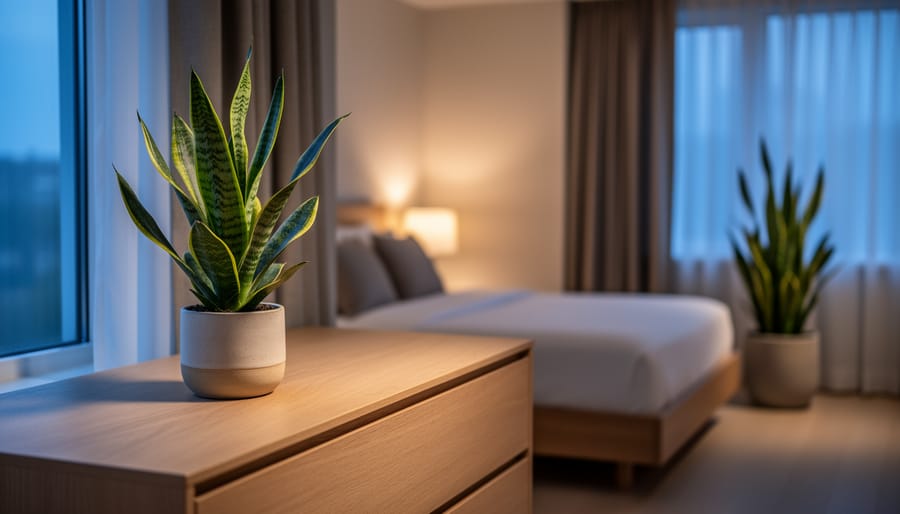
Why a Snake Plant in Your Bedroom Could Be Your Best Sleep Investment
Place your snake plant 3-6 feet from your bed to maximize oxygen production during nighttime hours, when these unique plants convert CO2 into fresh air—unlike most greenery that does the opposite. Position at least two medium-sized plants in bedrooms larger than 150 square feet for measurable air quality improvements, though don’t expect dramatic overnight changes; studies show consistent exposure over 2-3 weeks yields the best results for sleep quality. Choose spots with indirect light near windows or dresser tops, following basic interior design principles that keep floor space clear while adding vertical interest to empty corners.
Snake plants excel at filtering benzene, formaldehyde, and other sleep-disrupting toxins commonly released by mattresses, carpets, and furniture—making them particularly valuable in newly furnished bedrooms. Their low-maintenance nature means you’ll water just once every 2-3 weeks, perfect for busy homeowners who want bedroom benefits without constant care routines. Pair with consistent room temperatures between 60-75°F to optimize their air-purifying capabilities while you sleep, creating a healthier environment that supports deeper rest cycles naturally.
The Science Behind Snake Plants and Better Sleep
Here’s what makes snake plants particularly special for your bedroom: they work the night shift when you need them most. While most houseplants take in oxygen and release carbon dioxide during nighttime hours, snake plants do something remarkably different thanks to a special process called Crassulacean Acid Metabolism, or CAM photosynthesis.
Think of CAM photosynthesis as nature’s clever adaptation to hot, dry environments. Snake plants open their pores at night (when it’s cooler and they lose less water) to absorb carbon dioxide and convert it into oxygen. This means while you’re sleeping, your snake plant is actively refreshing the air in your room—a perfect partnership for restful nights.
But the benefits go beyond just oxygen production. According to research on indoor air quality, better air quality directly correlates with improved sleep quality and next-day performance. Snake plants can help filter out common indoor pollutants like formaldehyde, benzene, and trichloroethylene—chemicals often found in furniture, carpets, and cleaning products.
The connection between cleaner air and better sleep makes biological sense. When you breathe cleaner air throughout the night, your body doesn’t have to work as hard to process irritants and toxins. This allows for deeper, more restorative sleep cycles.
Interior designers and sleep specialists often recommend incorporating plants into bedroom spaces, and snake plants top the list for their unique nighttime oxygen production. It’s worth noting that while one plant won’t transform your bedroom into a pristine air sanctuary overnight, it’s a simple, affordable step toward creating a healthier sleep environment that actually works with your body’s natural rhythms.
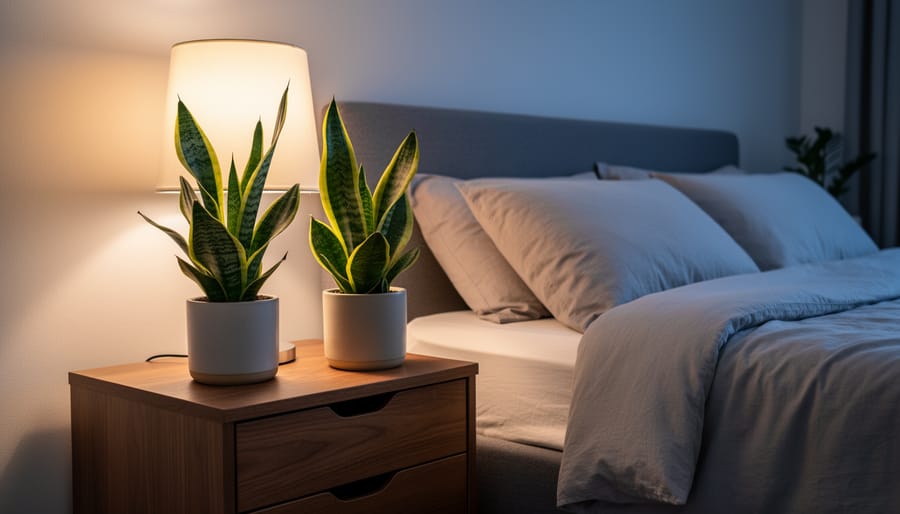
7 Snake Plant Benefits That Transform Your Bedroom Into a Sleep Sanctuary
Nighttime Oxygen Production
Here’s what makes snake plants particularly special for your bedroom: unlike most houseplants that only produce oxygen during daylight hours, snake plants keep working their magic while you sleep. Through a process called Crassulacean Acid Metabolism (CAM photosynthesis), these resilient plants absorb carbon dioxide and release oxygen at night—exactly when you need it most.
Most plants switch off their oxygen production after sunset, but snake plants have evolved to flip the script. This nighttime oxygen boost can help maintain fresher air quality in your enclosed bedroom space throughout those crucial seven to eight hours of rest. According to research by plant scientists, this continuous oxygen production creates a more balanced atmosphere, potentially reducing stuffiness and that “stale air” feeling you might notice in sealed bedrooms.
While one snake plant won’t dramatically transform your room into an oxygen chamber (let’s keep expectations realistic), having a few strategically placed around your sleeping space contributes to an overall healthier environment. Think of it as a gentle, natural air refresher working quietly in the background while you catch your beauty sleep.
Natural Air Purification
Here’s the thing about snake plants that got researchers excited: they’re surprisingly effective at cleaning the air you breathe while you sleep. Back in the 1980s, the NASA Clean Air Study discovered that snake plants can filter out common household toxins like formaldehyde (found in furniture and cleaning products), benzene (from paint and detergents), and trichloroethylene (in synthetic fabrics).
Think of your snake plant as a quiet, non-intrusive air purifier that doesn’t need electricity or filter replacements. While it won’t replace proper ventilation in your bedroom, it works alongside your existing habits to gradually reduce airborne nasties. The best part? This purification happens 24/7, making your bedroom environment cleaner over time. For those of us trying to create healthier sleeping spaces without complicated equipment, this natural filtration is a wonderfully simple solution that just keeps working in the background.
Humidity Regulation
Here’s something you might not expect from a simple houseplant: snake plants actually help regulate humidity levels in your bedroom while you sleep. Through a natural process called transpiration, these hardy plants release moisture into the air, gently increasing humidity in dry environments. This matters more than you might think for quality sleep.
When bedroom air becomes too dry—especially during winter months or in air-conditioned spaces—it can irritate your respiratory system, dry out your nasal passages, and trigger uncomfortable symptoms like snoring or a scratchy throat that wake you up. Interior design experts and plant specialists often recommend keeping bedroom humidity between 30-50% for optimal comfort, and snake plants contribute to maintaining that sweet spot naturally.
Unlike mechanical humidifiers that require regular cleaning and refilling, snake plants work quietly in the background without any maintenance hassle. While one plant won’t transform a desert-dry room into a tropical paradise, incorporating a few snake plants alongside other humidity-friendly practices creates a more comfortable sleeping environment that supports uninterrupted rest.
Low Maintenance Means Less Stress
Let’s be honest—most of us want beautiful, thriving plants in our bedrooms, but the thought of another thing to water, prune, and fuss over can feel overwhelming. That’s where snake plants truly shine. These resilient beauties practically take care of themselves, thriving on neglect rather than constant attention.
Snake plants need watering only every two to three weeks, tolerate low light conditions, and rarely attract pests. This low-maintenance nature means you can enjoy all the air-purifying and aesthetic benefits without adding stress to your daily routine. Unlike high-maintenance plants that wilt dramatically when you forget them for a few days, snake plants forgive your busy schedule.
Interior designers and wellness experts often recommend snake plants specifically for bedrooms because they help reduce bedroom clutter and visual chaos. There’s genuine peace of mind knowing your bedroom greenery will look fresh and vibrant whether you’re home every day or traveling for work—no plant-sitter required.
Zero Nighttime Allergies or Irritation
If you struggle with allergies or wake up with a stuffy nose, you’ll appreciate this often-overlooked benefit: snake plants are remarkably hypoallergenic. Unlike flowering plants that release pollen throughout the night, snake plants produce zero pollen and emit no fragrance whatsoever. This makes them perfect companions for sensitive sleepers, including those with asthma or seasonal allergies.
Many bedroom plants can trigger reactions through their flowers, sap, or aromatic compounds, but snake plants stay completely neutral. They won’t compete with your carefully chosen bedding or disrupt your breathing patterns during those crucial sleep hours. Interior designers and certified allergists often recommend them specifically for people who want greenery without the sneezing.
The clean, architectural leaves collect minimal dust compared to bushier plants, and a simple wipe-down every few weeks keeps them allergen-free. For anyone who’s had to remove beloved plants from their bedroom due to irritation, snake plants offer a welcome second chance at enjoying indoor greenery where it matters most.
Visual Calm and Aesthetic Benefits
Beyond their air-purifying qualities, snake plants bring a visual serenity to your bedroom that genuinely supports better rest. Their clean, vertical lines create a sense of order and calm—something your brain subconsciously appreciates when you’re trying to unwind after a hectic day. Unlike fussy, cluttered plant arrangements, snake plants have an architectural simplicity that complements nearly any bedroom style, from minimalist to bohemian.
Interior designers often recommend them for bedrooms specifically because their upright structure draws the eye without creating visual chaos. This matters more than you might think: a peaceful, uncluttered environment helps signal to your mind that it’s time to relax. The deep green, variegated leaves add just enough natural texture to soften hard surfaces without overwhelming your space. Plus, their low-maintenance nature means they’ll stay looking fresh without demanding constant attention—giving you one less thing to worry about when creating your perfect sleep sanctuary.
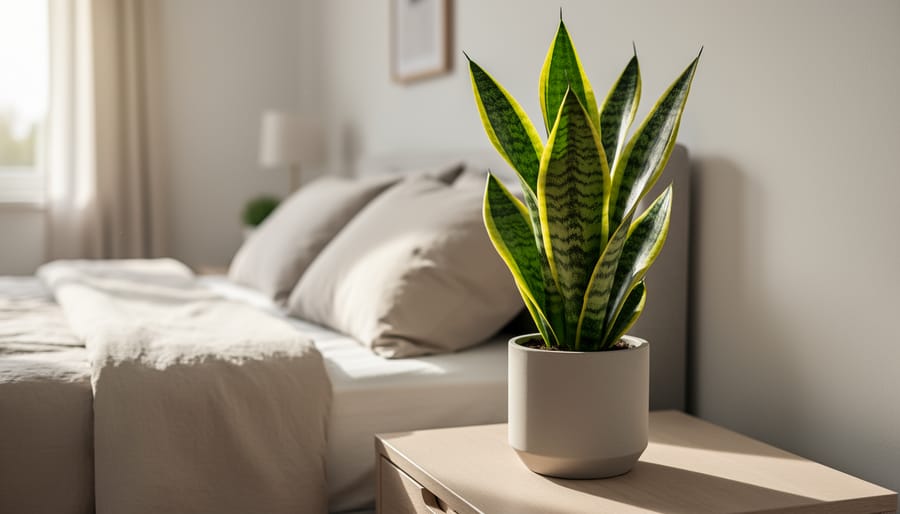
Carbon Dioxide Absorption
Unlike most houseplants that only produce oxygen during daylight hours, snake plants have a special superpower that makes them ideal bedroom companions. They perform a type of photosynthesis called Crassulacean Acid Metabolism (CAM), which allows them to absorb carbon dioxide and release oxygen throughout the night. This process is particularly beneficial while you sleep, as it helps maintain fresh air quality in your bedroom when ventilation is typically reduced.
When CO2 levels rise in enclosed spaces, it can lead to that stuffy, stale feeling that might leave you tossing and turning or waking up groggy. By continuously filtering carbon dioxide from your bedroom air, snake plants help create an environment that supports deeper, more restorative sleep. While they won’t transform your room into a forest overnight, even one or two medium-sized plants can contribute to noticeably fresher air quality. Many plant enthusiasts and interior designers recommend snake plants specifically for bedrooms because of this unique nighttime air-refreshing ability, making them both a functional and stylish addition to your sleep space.
How Many Snake Plants Do You Actually Need?
Here’s the truth: while snake plants do produce oxygen and filter air, one or two plants won’t transform your bedroom into a oxygen-rich sanctuary overnight. Let’s set realistic expectations based on what research actually tells us.
The famous NASA Clean Air Study used about 15 to 18 plants in a small, sealed space to achieve measurable air quality improvements. For your bedroom, interior designers and horticulturists typically recommend a more practical approach that balances benefits with available space and maintenance realities.
| Bedroom Size | Recommended Plants | Expected Benefits |
|---|---|---|
| Small (100-150 sq ft) | 2-3 medium plants | Modest air filtering, aesthetic improvement |
| Medium (150-250 sq ft) | 3-5 medium-large plants | Noticeable air quality contribution, humidity boost |
| Large (250+ sq ft) | 5-8 varied sizes | More significant air filtering, enhanced ambiance |
Plant size matters too. One large snake plant with multiple tall leaves provides more air-purifying surface area than several small pots with just a few leaves each. Consider clustering a few medium-sized plants in corners or on nightstands rather than scattering tiny ones throughout the room.
Remember, snake plants are part of a healthy bedroom environment, not a magic solution. Combined with proper ventilation, quality bedding, and good sleep hygiene, they contribute to creating a more pleasant, calming space that supports better rest. Start with two or three plants and see how you enjoy caring for them before committing to a jungle.
Best Placement Tips for Maximum Sleep Benefits
Finding the perfect spot for your snake plant can transform your bedroom into a healthier, more restful sanctuary. The good news? These adaptable beauties thrive in various conditions, giving you plenty of placement flexibility.
For maximum air purification benefits, position your snake plant within 6-8 feet of where you sleep. Nightstands and dresser tops make ideal locations, keeping the plant close enough to filter the air you breathe throughout the night. If you’re working with an organized space, corner placements work wonderfully too, maximizing floor space while still providing purifying benefits.
Light-wise, snake plants are remarkably forgiving. They’ll happily tolerate low-light corners or spots near windows with indirect sunlight. Avoid placing them in direct, harsh sunlight, which can scorch their leaves. North or east-facing windows offer gentle morning light that these plants appreciate.
Consider height and visual balance when arranging your plant. Taller varieties look stunning on the floor beside dressers or in empty corners, while compact varieties suit elevated surfaces beautifully.
Safety note: If you share your space with curious pets or young children, elevate your snake plant on a high shelf or dresser. While not severely toxic, these plants can cause mild discomfort if ingested. Interior designers often recommend placing them in adult-only spaces or using decorative plant stands that keep foliage out of reach while adding vertical interest to your bedroom design.
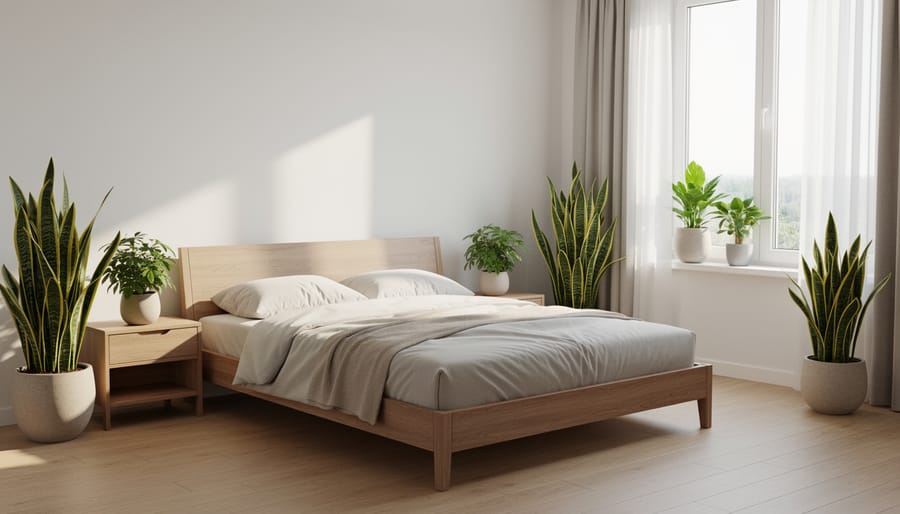
Caring for Your Bedroom Snake Plant (Without Losing Sleep Over It)
Good news: snake plants are practically designed for busy people who want bedroom benefits without the fuss. These resilient beauties thrive on benign neglect, making them perfect companions for your sleep sanctuary.
Watering your bedroom snake plant is delightfully simple. During growing season (spring and summer), water only when the soil feels completely dry—typically every two to three weeks. In winter, stretch that to once monthly or even less. The thick leaves store water efficiently, so your plant won’t suffer if you occasionally forget.
Your plant will signal distress with yellowing, mushy leaves if you’re being too generous with water, so watch for these cues and adjust accordingly.
Light requirements are wonderfully flexible for bedroom placement. While snake plants tolerate low light conditions near dressers or nightstands, they’ll grow more vigorously in bright, indirect light from a window with sheer curtains. Avoid harsh direct sunlight that can scorch those gorgeous leaves.
Temperature-wise, your bedroom is already ideal. Snake plants prefer the same comfortable range you do—between 60 and 85 degrees Fahrenheit. They’ll handle typical household conditions without complaint.
What to avoid? Cold drafts from air conditioning vents, heater proximity that creates extreme temperature swings, and frequent repositioning. Once you’ve found the perfect spot, let your plant settle in and do its air-purifying work while you sleep soundly.
What to Expect: Realistic Timeline for Sleep Improvements
Let’s be honest: your snake plant isn’t going to transform your sleep overnight. While these hardy beauties do purify air and release oxygen at night, you won’t wake up feeling like a different person after day one.
Most sleep experts suggest giving any environmental change at least two to four weeks before evaluating its impact. The air-purifying benefits of snake plants work gradually, and you’ll need several plants in your bedroom to notice measurable differences. Think of your snake plant as part of a bigger sleep wellness picture, not a standalone solution.
For the best results, pair your new green companion with proven sleep hygiene practices. Keep your bedroom cool (around 65-68°F), maintain a consistent sleep schedule, and limit screen time before bed. Consider blackout curtains, a comfortable mattress, and removing electronic devices from your nightstand.
Interior designers and sleep consultants often recommend creating a calming bedroom environment where plants play a supporting role alongside other intentional design choices. Your snake plant contributes to this peaceful atmosphere through its air-cleaning properties and visual appeal, working alongside these other elements to support better rest. Remember, improving sleep quality is a holistic journey, and every small step counts.
Adding a snake plant to your bedroom is one of the simplest, most rewarding decisions you can make for your sleep space. If you’re skeptical, start with just one plant and see how it transforms both the air quality and ambiance of your room. This is truly a low-risk, high-reward home improvement that requires minimal investment and even less maintenance.
Unlike complicated wellness trends or expensive bedroom upgrades, snake plants deliver real benefits without demanding much in return. They purify your air while you sleep, add natural beauty to your space, and thrive even if you forget about them for weeks. Many homeowners and interior design professionals recommend starting with one or two plants near your bedside or dresser to gauge the difference they make.
Your bedroom should be your personal sleep sanctuary, a space that supports both rest and rejuvenation. By incorporating these resilient, air-cleaning companions into your design, you’re taking a practical step toward better sleep and a more beautiful environment. Why not begin your snake plant journey today and discover just how transformative this simple addition can be?