
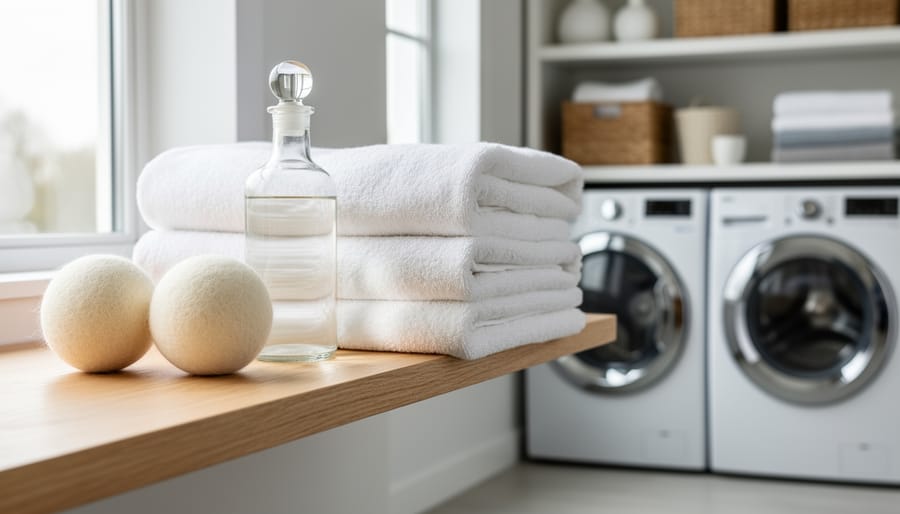
Why Your Towels Feel Like Sandpaper (And How to Make Them Cloud-Soft Again)
Reduce detergent by half—excess soap leaves a waxy residue that makes towels stiff and less absorbent, even if they appear clean. Skip fabric softener entirely and replace it with white vinegar in your rinse cycle, which naturally breaks down buildup without coating fibers. Shake towels vigorously before tossing them in the dryer to separate fibers and promote maximum fluffiness, then dry on medium heat with wool dryer balls that physically massage the fabric throughout the cycle.
Wash towels separately from clothing to prevent lint transfer and maintain proper water-to-fabric ratios that allow thorough rinsing. When storing clean towels in your organized bathroom space, ensure they have adequate air circulation—cramming them tightly on shelves compresses fibers and diminishes that plush hotel-quality texture you’re after.
Already have crunchy towels? Strip them by soaking in hot water with borax and washing soda for four hours, which removes years of accumulated detergent, mineral deposits, and body oils. This deep-cleaning method essentially resets your towels to their original softness. Combine these washing techniques with proper drying habits, and your towels will maintain that luxurious, cloud-like feel wash after wash.
Why Towels Lose Their Softness (The Science Behind the Scratch)
You know that disappointing feeling when you pull a towel from the linen closet and it feels more like sandpaper than a spa-worthy wrap? You’re not imagining things, and your towels aren’t conspiring against you. There’s actual science behind why those once-fluffy towels have turned scratchy.
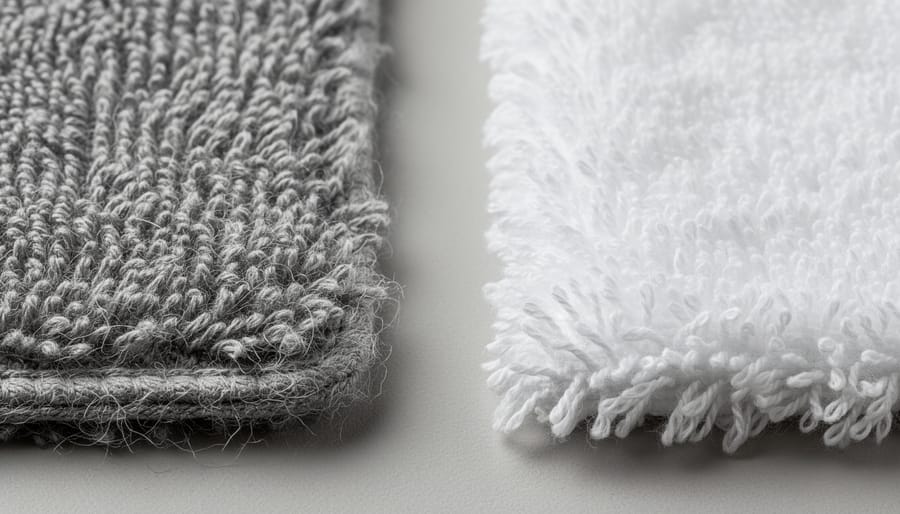
Let’s talk about how towels work. Each towel is made up of thousands of tiny cotton loops designed to stand upright and trap air between them. This structure is what makes towels soft and absorbent. When these loops stay flexible and separated, you get that cloud-like feeling. But when something interferes with these fibers, things go downhill fast.
One of the biggest culprits is detergent buildup. When you use too much detergent or don’t rinse thoroughly, residue clings to those cotton fibers like an unwelcome guest. This coating prevents the loops from moving freely and blocks their natural absorbency. The result? Stiff, scratchy towels that can’t do their job properly.
Hard water minerals add another layer of trouble. If your home has hard water, minerals like calcium and magnesium attach themselves to towel fibers with each wash. Over time, these deposits accumulate and essentially lock the fibers in place, creating that cardboard-like texture nobody wants.
Here’s an ironic twist: fabric softener, the product marketed to keep things soft, can actually make towels worse. It leaves behind a waxy coating that initially feels smooth but eventually builds up and creates a water-resistant barrier on your towels. Talk about counterproductive.
Over-drying is another sneaky problem. When towels tumble in high heat for too long, the fibers become brittle and damaged. Think of it like overcooking pasta—those fibers lose their natural flexibility and can’t bounce back to their original fluffy state.
The good news? Understanding these causes means you can prevent and even reverse the damage with some smart laundry strategies.
The Right Way to Wash Your Towels
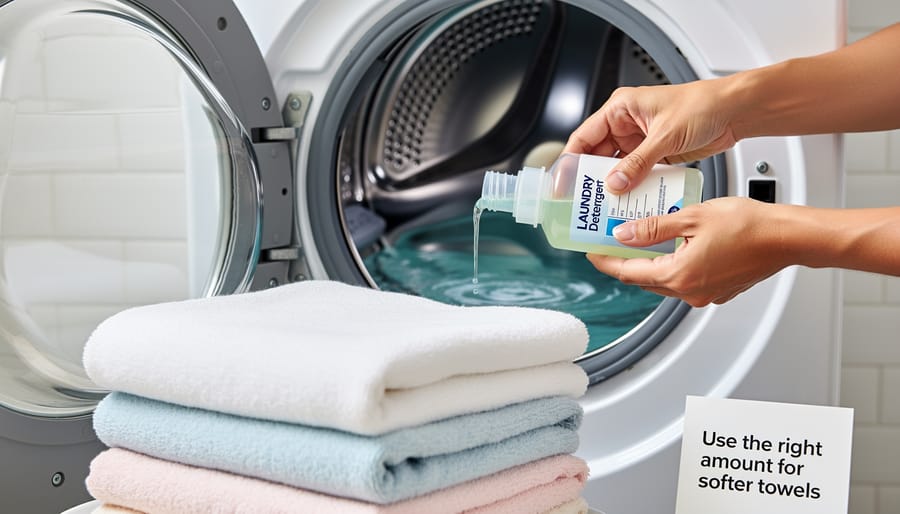
Choose the Perfect Detergent Amount (Less Is Actually More)
Here’s a surprising truth: more detergent doesn’t mean cleaner towels. In fact, using too much is one of the biggest culprits behind stiff, scratchy fabric. When you overdo it, detergent residue gets trapped in the fibers, creating a coating that makes towels feel crunchy instead of cloud-like.
So how much should you actually use? For standard top-loading machines, stick to one tablespoon of liquid detergent or two tablespoons of powder. High-efficiency washers need even less—about one to two teaspoons of liquid. Your towels don’t need a bubble bath to get clean; they just need the right amount to lift dirt without leaving behind buildup.
Think of it like seasoning food: a little goes a long way, and too much ruins the experience. Professional laundry experts I’ve connected with consistently recommend starting with half the amount suggested on the detergent bottle, especially if you have soft water. You can always add a bit more if needed, but once residue builds up in your towels, it takes extra effort to remove it. Trust the process—your fluffy towels will thank you for showing restraint at the detergent dispenser.
Water Temperature and Cycle Settings That Matter
The temperature and cycle you choose can make a remarkable difference in maintaining that hotel-worthy softness you’re after. Here’s what works best: warm water hits the sweet spot for most towel loads. It’s hot enough to release dirt and body oils effectively, but gentle enough to preserve the fiber integrity that keeps your towels fluffy. Reserve hot water for heavily soiled towels or when dealing with illness in your household.
When it comes to cycle selection, think gentle or delicate. Many homeowners assume towels need aggressive washing to get clean, but that’s actually a myth that laundry professionals will tell you causes unnecessary wear. A gentle cycle reduces the mechanical stress on fibers while still providing thorough cleaning. The key is giving towels enough space to move freely in the drum, which means not overstuffing your machine.
If your washer has a “bulky” or “towel” setting, even better. These specialized cycles balance cleaning power with fiber protection. For everyday freshness, a shorter wash time prevents excessive agitation that can mat down those plush loops. Remember, clean doesn’t require rough treatment. By pairing warm water with a gentler cycle, you’re creating the perfect environment for towels that stay wonderfully soft wash after wash.
The Fabric Softener Debate: What Really Works
Here’s a surprising truth that might change your laundry routine: fabric softeners could be sabotaging your towels. While that bottle promises cloud-like softness, it’s actually coating your towel fibers with a waxy residue that reduces their absorbency over time. Think about it – if your towels feel soft but don’t dry you properly, what’s the point?
The science is straightforward. Fabric softeners work by depositing chemicals onto fibers, which smooths them down and creates that silky feel. But towels need texture to absorb water effectively. That coating creates a barrier between the cotton fibers and your skin, leaving you with pretty but practically useless towels.
So what’s the alternative? White vinegar is your new best friend. Add half a cup to your rinse cycle once a month to strip away detergent buildup and naturally soften fibers without compromising absorbency. Don’t worry about the smell – it disappears completely during drying. Some homeowners I’ve worked with were skeptical at first, but they’ve become vinegar converts after seeing the results.
Another game-changer is reducing your detergent amount. Most of us use way too much, and that excess soap builds up in towel fibers, making them stiff and less effective. Try using half your normal amount – your towels will thank you, and you’ll save money too.
For those who absolutely can’t give up traditional softeners, consider using dryer balls instead. These work mechanically to fluff fibers during drying without adding any coating.
Smart Loading Practices for Fluffier Results
Here’s the thing about washing towels: they need room to breathe. When you cram too many towels into your washing machine, you’re actually working against yourself. Overcrowding prevents proper water circulation, which means detergent can’t rinse out completely and the fabric can’t move freely during the wash cycle. The result? Stiff, scratchy towels that feel more like sandpaper than the fluffy clouds you’re hoping for.
Think of your washing machine like a dance floor. Your towels need space to move around, tumble, and get thoroughly cleaned. When they’re packed in too tightly, they just sit there in a compressed mass, trapping detergent residue and preventing effective rinsing. This buildup is one of the main culprits behind that rough texture you’re trying to avoid.
For the fluffiest results, wash your towels separately from other laundry items. Clothing items like jeans or shirts with zippers can be surprisingly rough on towel fibers, causing them to break down faster. Plus, towels typically need different wash settings than your regular clothes.
A good rule of thumb is to fill your washing machine only halfway to two-thirds full when washing towels. This gives them plenty of room to circulate freely, ensures thorough rinsing, and helps maintain that plush texture you love.
Drying Techniques That Keep Towels Pillowy-Soft
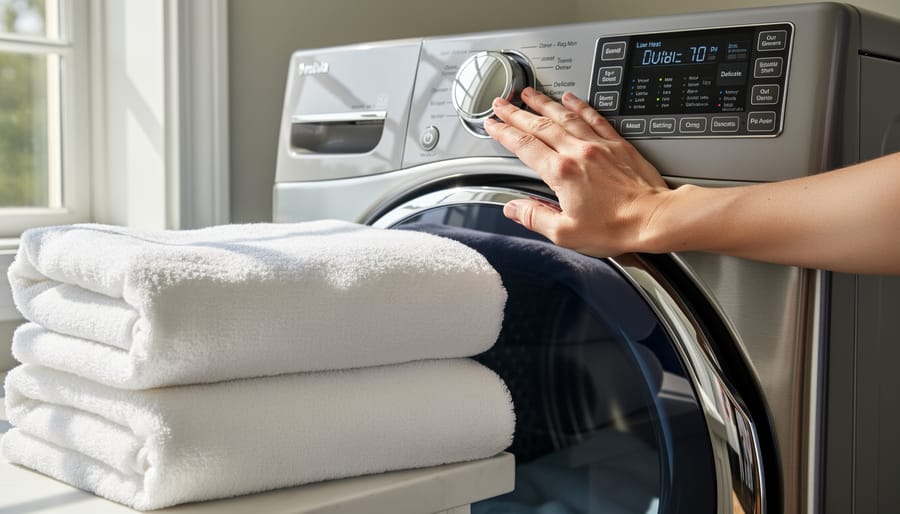
The Dryer Settings That Make All the Difference
Your dryer settings can make or break towel softness, and the good news is that small adjustments yield big results. Here’s what actually works.
Start with medium heat instead of cranking it to high. While high heat might seem efficient, it’s tough on cotton fibers, causing them to become brittle and stiff over time. Medium heat dries towels thoroughly while preserving their natural softness and extending their lifespan. Think of it like cooking—gentle heat prevents burning and keeps everything in better condition.
The biggest mistake? Over-drying. When towels tumble beyond the point of being dry, the heat continues to damage fibers unnecessarily. This is where your dryer’s moisture sensor becomes your best friend. If your machine has this feature, use it. The sensor automatically stops the cycle when towels reach optimal dryness, preventing that crispy, cardboard-like texture nobody wants. If you don’t have a sensor, check your towels about three-quarters through the cycle and remove them while they’re still slightly damp to the touch.
Now, let’s talk about the secret weapon: wool dryer balls. These natural wonders work by bouncing between towels as they tumble, physically separating the fibers and allowing better air circulation. The result? Fluffier towels without fabric softener. Use three to six balls per load for maximum fluffing power. Many homeowners who’ve made this simple switch report noticeably softer towels within just a few wash cycles. Plus, they’re reusable for years, making them both practical and economical.
The Shake-and-Fluff Method (Your Secret Weapon)
Here’s the game-changer you’ve been waiting for: the shake-and-fluff method. This simple technique takes just seconds but makes a remarkable difference in keeping your towels cloud-soft.
Before tossing your wet towels into the dryer, grab each one and give it a vigorous shake. We’re talking about a good, energetic snap that gets those fibers moving. This pre-drying shake separates the fibers that have clumped together during washing, allowing air to circulate better during the drying cycle.
But don’t stop there. Once your towels are dry, pull each one out and shake it again with gusto. This second shake is equally important because it fluffs up the fibers that may have compressed during tumbling, restoring that plush, hotel-quality loft you’re after.
Think of it as giving your towels a mini workout. The shaking motion loosens compacted fibers, increases surface area, and literally shakes life back into the fabric. Professional laundry services have long used this technique, and now you have the insider secret.
Make this a habit with every load, and you’ll notice your towels maintain their softness far longer than they would otherwise. It’s free, requires no special products, and takes less than a minute per load.
When Air-Drying Makes Sense (And When It Doesn’t)
Line-drying towels sounds like an eco-friendly win, and it definitely saves energy. But here’s the truth: air-drying outdoors can leave your towels feeling like cardboard. When towels dry naturally, the fibers stiffen as they lose moisture without the tumbling action that keeps them separated and fluffy.
That said, air-drying isn’t all bad. If you enjoy the fresh scent and environmental benefits, try a hybrid approach that gives you the best of both worlds. Start by hanging your towels outside or on a drying rack until they’re about 80 percent dry. This gets most of the moisture out while letting you enjoy that sunshine-fresh smell. Then, toss them in the dryer on low heat with dryer balls for just 10 to 15 minutes. This quick tumble will fluff up those fibers beautifully without using much energy.
Professional laundry experts often recommend this combination method, especially for thick bath towels. You’ll save electricity, reduce wear from extended machine drying, and still enjoy that cloud-like softness. It’s a practical compromise that works wonderfully for busy households looking to balance sustainability with comfort.
Deep-Cleaning Tricks to Restore Already-Stiff Towels
Don’t worry if your towels have already turned stiff and scratchy. With a little TLC and the right techniques, you can bring them back to life. Think of this as a spa treatment for your tired linens!
The vinegar strip method is your first line of defense. This process removes built-up detergent, fabric softener residue, and mineral deposits that have accumulated in the towel fibers. Start by loading your stiff towels into the washing machine without adding any detergent or softener. Set your machine to the hottest water setting appropriate for your towels and add one to two cups of white vinegar directly to the drum. Run a complete wash cycle, allowing the vinegar to work its magic by breaking down all those stubborn residues.
Once that cycle finishes, don’t remove the towels yet. Run a second wash cycle, this time using half a cup of baking soda instead of detergent. The baking soda acts as a natural deodorizer and helps further soften the fibers. Again, use the hottest water setting your towels can handle. This double-wash approach might seem time-consuming, but it’s incredibly effective at restoring fluffiness.
For extremely stubborn cases, try an overnight hot water soak before the vinegar treatment. Fill your washing machine or a large tub with the hottest water possible, add a cup of washing soda (not baking soda—it’s stronger), and let your towels soak for 8-12 hours. This extended soaking time allows the solution to penetrate deep into the fabric, loosening years of buildup.
After completing your rehabilitation cycle, dry the towels using medium heat with wool dryer balls to boost fluffiness. Avoid high heat, as this can actually set in any remaining residue and reverse your progress.
Most towels respond beautifully to this treatment on the first try, but heavily damaged towels might need a repeat session. The good news? Once you’ve restored them and maintain proper washing habits, they’ll stay soft and luxurious for years to come.
Long-Term Maintenance Tips for Lasting Fluffiness
Keeping your towels consistently fluffy requires a thoughtful approach to their everyday care. One of the simplest yet most effective strategies is rotating your towel collection regularly. Instead of using the same towels week after week, cycle through your entire collection so each towel gets adequate rest between uses. This prevents fiber fatigue and extends the lifespan of your entire towel wardrobe.
Storage plays a surprisingly important role in maintaining that luxurious feel. Your towels need breathing room to stay fresh and fluffy. Avoid cramming them into tight linen closets where air can’t circulate. Instead, fold them loosely and consider investing in bathroom storage solutions that allow for proper ventilation. Open shelving solutions or wire baskets work beautifully for this purpose, and they add a spa-like aesthetic to your space. Good bathroom organization and proper towel storage can make a real difference in maintaining towel quality.
If you live in an area with hard water, you’re fighting an uphill battle. Hard water deposits mineral buildup on towel fibers, making them stiff and scratchy over time. Consider installing a water softener if hard water affects your entire home. For a more budget-friendly approach, add a half-cup of distilled white vinegar to your rinse cycle monthly to dissolve mineral deposits.
Finally, know when to say goodbye. Even with perfect care, towels eventually lose their effectiveness. When you notice persistent thinning, a lingering musty smell that won’t wash out, or a rough texture that doesn’t improve with treatment, it’s time to retire those towels. Many animal shelters gratefully accept old towels, giving them a second life while you enjoy fresh, fluffy replacements.
Here’s the truth: achieving luxuriously soft and fluffy towels doesn’t require expensive products or complicated routines. The simple adjustments we’ve covered can transform your entire laundry experience, turning those stiff, scratchy towels back into the cloud-like comfort they were meant to be.
You don’t need to overhaul everything at once. Start with just one or two changes today. Maybe it’s cutting your detergent amount in half, or perhaps it’s finally saying goodbye to fabric softener and trying vinegar instead. Even something as simple as giving your towels a good shake before tossing them in the dryer can make a noticeable difference.
The beauty of this approach is that maintaining towel softness becomes second nature once you establish these habits. Your towels will thank you, and so will your skin. Remember, the professionals we’ve consulted agree: consistency matters more than perfection. A few mindful tweaks to your washing routine today means you’ll enjoy plush, absorbent towels for years to come. You’ve got this, and your bathroom deserves that spa-like luxury every single day.