
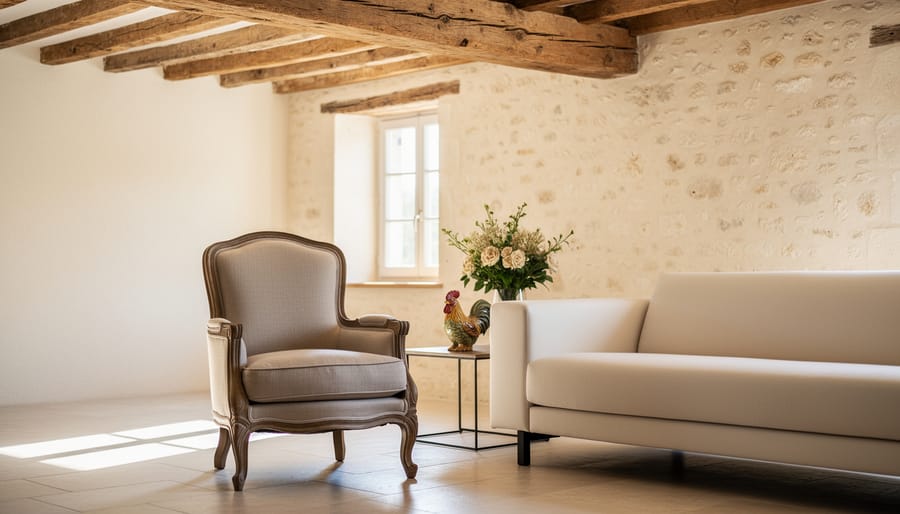
Modern French Country Interiors That Feel Fresh, Not Fussy
Modern French country interiors have evolved far beyond the heavy furniture and overly ornate details that defined the style decades ago. Today’s interpretation strips away the fussiness while keeping the soul: warm neutrals replace busy florals, streamlined silhouettes replace bulky armoires, and carefully chosen rustic elements create character without clutter.
The beauty of this approach is how it fits contemporary living. You’re working with the same foundational elements that made French country beloved, like natural materials, vintage-inspired pieces, and that unmistakable sense of lived-in comfort. But you’re editing ruthlessly. A single reclaimed wood beam makes more impact than an entire ceiling covered in faux timber. One antique linen-upholstered chair tells a story; a room full of distressed furniture just looks tired.
Interior designers and certified decorators we’ve collaborated with emphasize that getting this balance right means understanding what to keep and what to leave behind. The patina of aged materials stays. The ceramic rooster collection goes. Limestone and plaster finishes remain essential. The country kitsch does not.
This guide breaks down exactly how to achieve modern French country style in every room of your home in 2026. You’ll learn which materials deliver authentic character, which color palettes feel current rather than dated, and how to avoid the common mistakes that make spaces feel more theme park than timeless. Whether you’re starting from scratch or refreshing existing rooms, you can create interiors that feel both historically rooted and completely relevant to how we live today.
What Makes French Country ‘Modern’ in 2026?
Modern French country has shed the heavy fabrics, busy toile prints, and ornate flourishes that defined the style a decade ago. Today’s interpretation leans on restraint rather than abundance, think one well-chosen antique armoire instead of a room packed with distressed furniture, or a single stone accent wall rather than exposed beams competing with brick and plaster.
The cleaner aesthetic comes from borrowing principles of contemporary design without abandoning French country’s soul. Certified interior designers now advocate for edited color palettes built around two or three main tones instead of the traditional jumble of florals and patterns. Lines are simpler, silhouettes more streamlined, and surfaces less cluttered. A modern French country kitchen might feature flat-panel cabinetry with subtle detailing rather than ornately carved doors, paired with rustic open shelving in warm oak.
What hasn’t changed is the commitment to natural materials and lived-in comfort. The 2026 version still celebrates limestone, reclaimed wood, linen, and aged brass, but uses them more deliberately. You’ll see a beautiful weathered dining table as the room’s anchor, surrounded by minimal décor, rather than layered with runners, centerpieces, and coordinating chair cushions.
Functional minimalism plays a bigger role now too. Modern French country homes hide technology thoughtfully, incorporate ample storage that doesn’t announce itself, and design around how people actually live rather than formal entertaining conventions. Open floor plans get warmed up with French country elements, a rustic console table defining the entryway, linen curtains softening large windows, without the space feeling carved into separate period rooms.
The palette has shifted toward softer, more sophisticated neutrals. Creamy whites, warm putty tones, and gentle grays form the foundation, with accent colors pulled from nature, sage, terracotta, soft blue, used sparingly. This restrained approach lets architectural details and quality materials take center stage instead of competing for attention with pattern and color.
Color Palettes That Bridge Old and New
The secret to modern French country color schemes lies in restraint, a word that wouldn’t have applied to this style a decade ago. Where traditional French country embraced saturated yellows, bold blues, and busy floral patterns competing for attention, the 2026 interpretation favors a quieter, more sophisticated approach that lets architecture and natural materials take center stage.
Start with a foundation of warm whites and soft neutrals. Think bone white rather than stark white, greige instead of cool gray. These shades provide the clean backdrop modern spaces need while maintaining the warmth French country demands. Interior designers working in this style consistently recommend Benjamin Moore’s Swiss Coffee or Sherwin-Williams’ Alabaster as base colors that work across different lighting conditions without feeling cold.
Your accent palette should be equally edited. Instead of multiple competing colors, choose one or two muted tones that nod to French heritage without announcing it. Soft sage, dusty terracotta, or weathered blue work beautifully when used sparingly, on a single accent wall, through textiles, or in select furniture pieces. The goal is suggestion, not statement.
Warm grays have become the bridge between old and new in modern French country interiors. Use them on cabinetry, trim, or larger furniture pieces to create visual calm while providing enough contrast to prevent the all-white monotony that plagued earlier farmhouse trends. Pair these grays with natural wood tones that lean warm rather than orange.
The palette that works best avoids the trap of being either too sterile or too busy. You’re aiming for a room where the colors recede slightly, creating a serene envelope that highlights texture, form, and the people living in the space. Test paint samples in both natural and artificial light before committing, what reads as warm beige at noon might shift cool by evening.
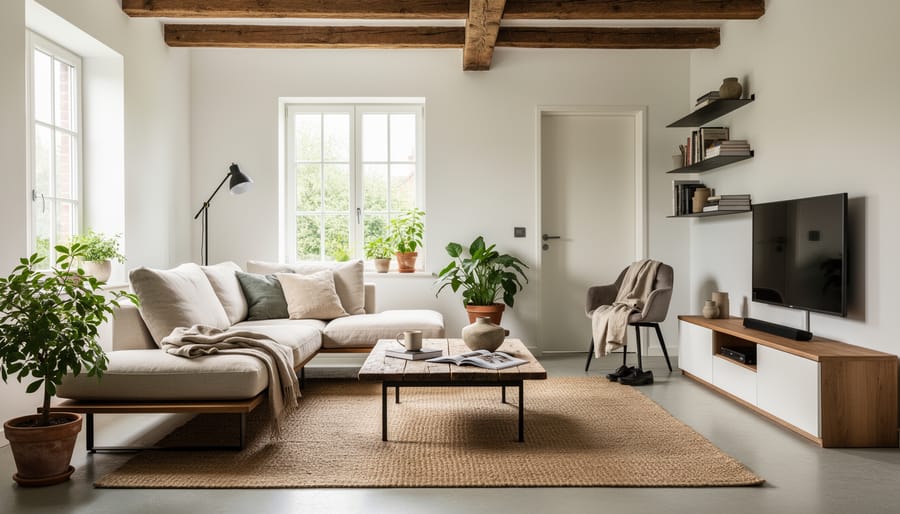
Furniture Choices: When to Go Rustic, When to Go Refined
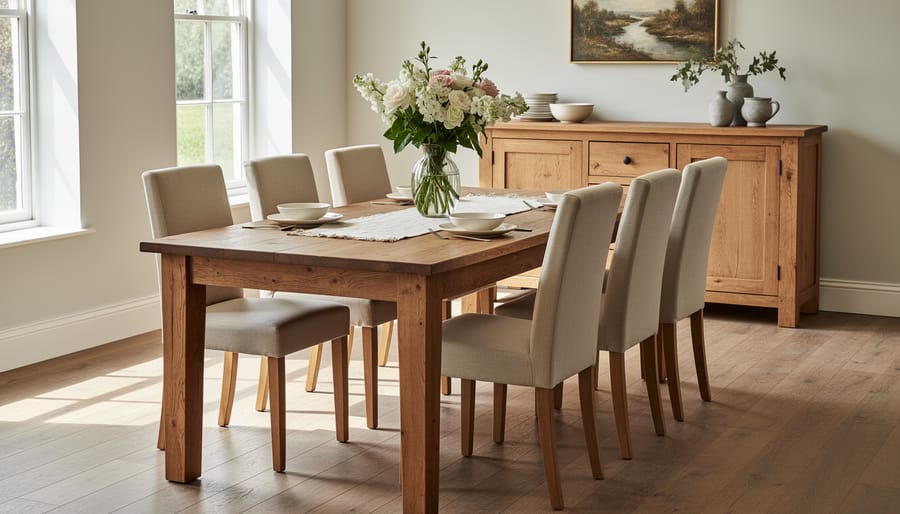
The New French Country Dining Room
A modern French country dining room centers on a substantial wood table with clean lines, skip heavily turned legs in favor of straight or gently tapered bases that let the grain speak for itself. Look for tables in oak, walnut, or reclaimed pine with a natural or lightly waxed finish rather than dark stains that read dated.
For seating, mix upholstered chairs in linen or Belgian linen-look fabrics with one or two ladder-back wood chairs to break uniformity. The upholstered pieces bring comfort for long dinners without the fussiness of tufting or excessive piping. Keep cushion colors neutral, warm whites, soft grays, or natural linen tones.
Storage should be functional first. A simple wood sideboard or buffet with minimal hardware works better than ornate hutches. If you want display storage, choose a piece with glass doors in slim black metal frames rather than traditional mullions. This lets you show off simple white dishes or pottery without the cabinet itself competing for attention.
Scale matters: leave breathing room around furniture. A dining room that feels spacious reads more modern than one packed with pieces.
Living Room Essentials Without the Clutter
A modern French country living room starts with quality over quantity. Choose a substantial linen sofa in a neutral tone, cream, warm gray, or soft taupe, as your anchor piece. This single investment sets the room’s tone without demanding coordinating pieces.
Skip the matched furniture suite entirely. Instead, pair your sofa with a single vintage armchair or a pair of simple wooden side chairs. Leave breathing room between pieces rather than pushing everything against walls or clustering furniture tightly. A room feels more spacious when you can see the floor.
For storage and display, one well-chosen piece beats several mediocre ones. A low oak console or an antique painted cabinet provides function while adding character. Keep surfaces mostly clear, a simple lamp, perhaps a ceramic pitcher with fresh branches, nothing more.
Coffee tables should be simple: a chunky wood slab on iron legs, a round stone-top table, or even a vintage trunk. Resist adding decorative trays, stacks of books, and candle collections. The table serves your daily life, not as a styling vignette.
Your living room should look like you actually live there, not like you’re staging it for constant photography.
Materials and Textures That Ground the Style
The right materials create the foundation for modern French country interiors, they’re what make a space feel grounded and authentic rather than theme-park rustic. Start with natural wood in warm, honey tones or bleached finishes. Skip heavily distressed pieces that look artificially aged; instead, choose furniture with genuine patina or clean-lined oak, walnut, or reclaimed pine that shows real character through grain and subtle wear.
Linen deserves its reputation as the fabric of French country style. Its relaxed texture works on upholstery, window treatments, and bedding without feeling overly precious. In 2026, we’re seeing linen used in its natural oatmeal and flax tones rather than bright whites, which read more modern and hide wear better. Layer it with other natural fibers like cotton, wool, and jute to build depth without pattern overload.
Stone brings an unmistakable European sensibility to kitchens and bathrooms. Limestone, marble with soft veining, or even concrete that mimics the look of aged plaster all work beautifully. These materials perform well under real-world use while establishing that coveted connection to old-world craftsmanship.
| Material | Best Applications | Maintenance Level | Budget Notes |
|---|---|---|---|
| Natural Wood (oak, walnut, pine) | Flooring, furniture, ceiling beams | Low to moderate; occasional oiling or waxing | Wide range; reclaimed often costs less than new |
| Linen | Upholstery, curtains, bedding | Moderate; wrinkles are expected and accepted | Mid to high; worth the investment for longevity |
| Limestone or marble | Countertops, flooring, backsplashes | Moderate to high; requires sealing | High; consider porcelain alternatives for budget projects |
| Aged metals (iron, brass, bronze) | Hardware, lighting fixtures, railings | Low; patina develops naturally | Mid-range; unlacquered finishes age beautifully |
Aged metals in unlacquered brass, oil-rubbed bronze, or blackened iron bring warmth without shine. Use them on cabinet hardware, light fixtures, and curtain rods where they’ll develop a living patina over time.
The key to layering these textures successfully is restraint. Pick three or four dominant materials per room and let them repeat in different applications. A kitchen might combine natural oak cabinetry, limestone counters, linen window treatments, and brass hardware, that’s enough variety to create interest without visual chaos. Save heavily textured plaster or limewash walls for spaces where they can be a feature rather than competing with patterned tile or busy upholstery.
Simplifying the Decorative Elements
The secret to modern French country decoration isn’t about collecting more pieces, it’s about displaying fewer, better ones with intention.
Start by editing what you already own. Pull everything off your shelves and surfaces, then put back only what you genuinely love or use regularly. That inherited pottery collection? Choose three standout pieces instead of cramming all twelve onto one shelf. The breathing room you create makes each remaining item feel more significant rather than lost in visual noise.
Statement pieces earn their keep by doing the work of multiple smaller items. A single oversized ceramic urn on a mantel creates more impact than five small vases lined up. Look for pottery with handmade qualities, irregular glazes, visible throwing marks, variations in color, that add character without ornate decoration. Cream, ochre, and soft terra-cotta tones work better in modern spaces than busy hand-painted patterns.
Vintage finds deserve strategic placement where they can shine. That antique French bread board belongs propped against a kitchen backsplash where you’ll see it daily, not buried in a cupboard. Flea market linens work best in functional roles, actually used as dish towels or draped over a bench, rather than stacked pristinely for show.
Apply the same restraint to walls. Two or three larger pieces create a calmer backdrop than a gallery wall packed edge to edge. Choose artwork and mirrors with simple frames in natural wood or aged metal rather than ornate gilt that reads too formal.
Lighting fixtures offer the biggest decorative impact because they’re both functional and visual. Swap builder-grade fixtures for statement pieces in materials like linen, rattan, or hand-forged iron. A sculptural chandelier or well-chosen sconces can define a room’s character while everything else remains purposefully understated.
The goal isn’t a bare space, it’s a curated one where every decorative element justifies its presence through beauty, meaning, or both.
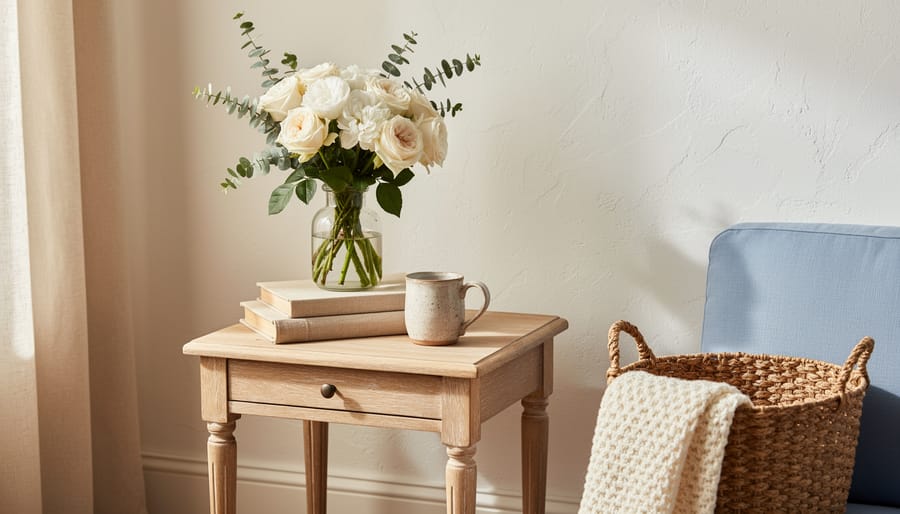
Kitchens and Bathrooms: Where Function Meets French Charm
Kitchens and bathrooms demand more from design than any other room. They’re the spaces where stunning aesthetics collide with plumbing codes, heat resistance, and daily wear. Modern French country shines here because it prioritizes natural, durable materials and timeless forms, exactly what high-performance spaces need.
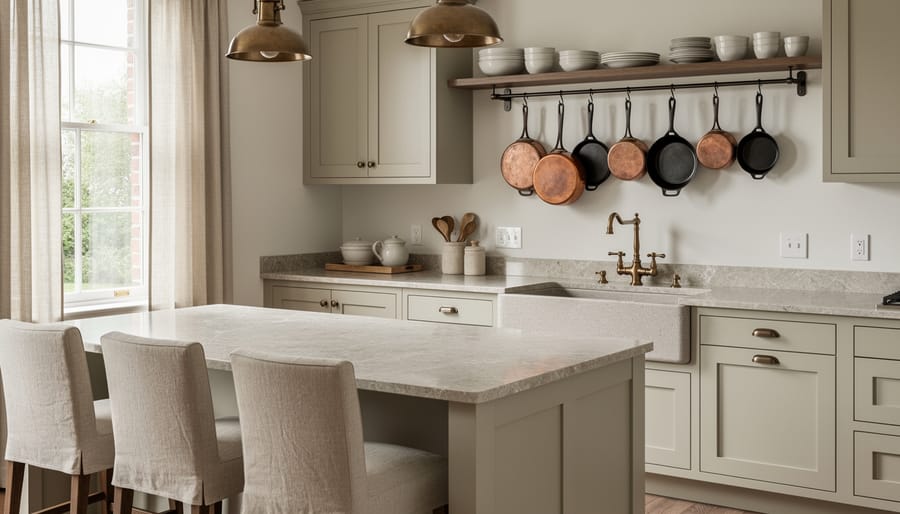
Start with cabinetry that does the heavy lifting. Shaker-style doors in painted finishes work beautifully: soft whites, warm grays, or even muted sage. Skip the ornate carvings and heavy distressing that read dated. If you want warmth, mix in natural wood on a kitchen island or open shelving, but keep the palette restrained. Two-tone kitchens, white uppers with a deeper base color or wood lowers, create visual interest without fussiness.
Hardware matters more than you’d think. Unlacquered brass ages gracefully and adds warmth, while matte black offers contrast in a cleaner space. Bin pulls and simple knobs in these finishes nod to French farmhouse roots without announcing it. Avoid anything too shiny or ornate; the goal is understated quality.
For countertops, natural stone delivers authenticity. Honed marble or limestone brings that soft, lived-in look, though you’ll need to seal and maintain them properly. Quartzite offers similar aesthetics with better performance if you’re worried about staining. In bathrooms, consider marble-look porcelain for vanity tops, modern manufacturing makes it nearly indistinguishable from the real thing, and it handles moisture without the upkeep.
Backsplashes can anchor the French country feel. Subway tile in a handmade finish, Zellige tile with its subtle irregularities, or even slab marble behind the range all work. Keep grout lines relatively tight and colors neutral. Busy patterns fight the serene, edited look you’re after.
Fixtures are where function meets code. All plumbing fixtures must comply with current standards, but that doesn’t mean sacrificing style. Bridge faucets, apron-front sinks, and wall-mounted bathroom taps all honor French country tradition while meeting performance requirements. Choose finishes that coordinate with your hardware, unlacquered brass, brushed nickel, or matte black, and invest in quality brands that back function with longevity.
Lighting deserves attention too. Simple pendants over islands, sconces flanking bathroom mirrors, or even a modest chandelier over a freestanding tub add character without competing with the architecture. Keep lines clean and finishes consistent across the space.
Common Mistakes to Avoid
The biggest obstacle to achieving modern French country isn’t lack of budget or square footage, it’s knowing when to stop. After working with dozens of homeowners through these transformations, I’ve seen the same missteps repeated, each one pulling the look backward into either dated territory or losing the style entirely.
Here are the five mistakes that derail modern French country interiors most often, with straightforward fixes for each:
- Going full farmhouse theater. When every surface is distressed, every beam is faux-aged, and roosters appear on three different textiles, you’ve crossed into theme park territory. Fix: Choose one or two genuinely rustic anchor pieces per room and keep everything else clean-lined and understated.
- Creating a wood tone free-for-all. Mixing woods works beautifully, but five different finishes fighting for attention creates visual chaos. Fix: Stick to two, maybe three wood tones maximum per space, and make sure they share either warm or cool undertones.
- Cluttering horizontal surfaces into oblivion. Traditional French country celebrated collections, but modern interpretations demand breathing room. Fix: Edit ruthlessly. Display three beautiful pieces instead of fifteen mediocre ones, and leave empty space on counters and shelves.
- Choosing furniture that overwhelms the room. An oversized armoire might be authentic, but if it dominates a small bedroom and blocks light, it’s wrong for your space. Fix: Measure carefully and prioritize proportion over provenance. A smaller piece that fits properly beats an impressive one that doesn’t.
- Sacrificing function for aesthetic purity. Refusing modern conveniences like recessed lighting or updated plumbing fixtures makes spaces feel like museum exhibits, not homes. Fix: Blend periods intentionally. Pair that farmhouse sink with a contemporary faucet. Install LED recessed lights alongside a vintage chandelier.
The thread connecting all these mistakes is the same: mistaking authenticity for accuracy. Modern French country isn’t about recreating a provincial cottage from 1850. It’s about capturing that cottage’s warmth, craft, and lived-in comfort within a home that functions for how you actually live today. When a choice forces you to choose between looking the part and living comfortably, choose comfort. The style adapts better than you think.
Making It Work in Different Home Styles
Modern French country isn’t reserved for sprawling farmhouses or period homes, it translates surprisingly well across different architectural contexts when you adapt rather than force the aesthetic.
In urban apartments with contemporary bones, lean into the contrast. Let your clean-lined windows and modern lighting stay as they are, then layer in French country through textiles, natural wood furnishings, and a warm neutral palette. A linen sofa, rustic dining table, and worn Persian rug can transform a sterile box into something with soul. Skip the heavy drapery and ornate moldings that would fight your space’s modern reality.
Suburban homes with open-concept layouts benefit from using French country elements to create visual zones without walls. A farmhouse table anchors the dining area, a slipcovered sectional defines the living space, and strategic rug placement helps delineate functions. Keep your sight lines clean by limiting tall furniture and maintaining a cohesive color story that flows from one zone to the next.
Actual farmhouses or older homes have built-in advantages but can tip into theme-park territory if you’re not careful. Work with your existing architectural details, original wood floors, exposed beams, vintage windows, but edit your additions carefully. These spaces already have character, so your furnishings and decor should feel restrained rather than piled on.
The key across all contexts is respecting what your home already is. Modern flooring doesn’t need faux distressing to work with French country furniture. Contemporary recessed lighting pairs perfectly with rustic wood pieces. Let different eras coexist instead of trying to make everything match a single time period.
The beauty of modern French country lies in its adaptability. This isn’t a style that demands you follow a strict checklist or source every piece from a specific region. Instead, think of it as a set of guiding principles that you can interpret through your own lens.
Your version of this aesthetic should feel like home, not like you’re living in someone else’s staged photograph. Start small if the whole-house transformation feels overwhelming. A single room, or even just a cozy corner with a linen-covered chair and a vintage ceramic pitcher, can introduce the essence of this style. Pay attention to what makes you feel comfortable and grounded, then build from there.
The most successful French country interiors we see today share three qualities: they prioritize natural materials over synthetic ones, they favor pieces with longevity over trendy disposables, and they create spaces that invite you to actually live in them rather than tiptoe around preserving perfection.
Whether you lean heavily rustic or prefer a barely-there whisper of French influence, you’re on the right track if your space feels warm, unforced, and genuinely yours. That’s the soul of this style, and it’s what makes it worth adopting in 2026.