
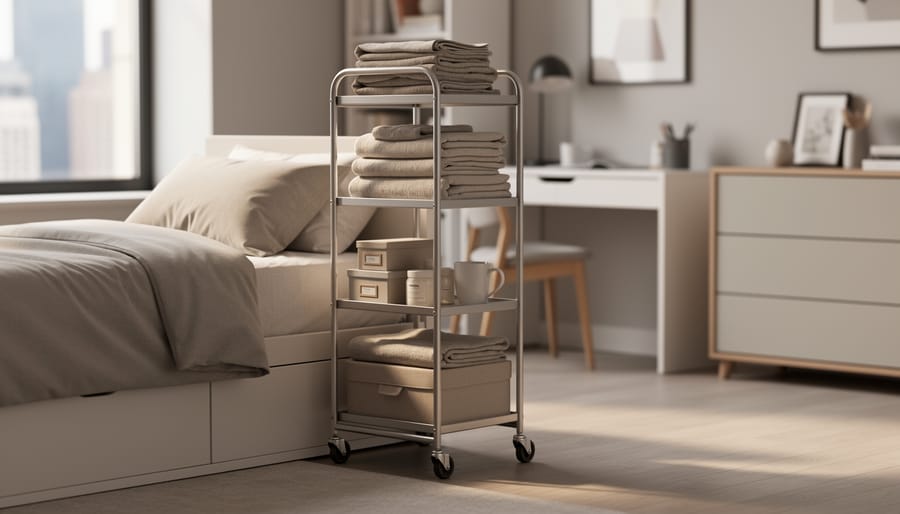
8 Small Rolling Storage Cart Ideas That Actually Maximize Your Space
Small rolling storage carts solve the biggest challenge in compact living: finding space where there isn’t any. These mobile organizers let you tuck storage into narrow gaps, slide it under counters, and move supplies exactly where you need them, whether that’s beside your desk, next to your bed, or between your washer and dryer.
The beauty of rolling carts lies in their flexibility. Unlike fixed shelving or bulky cabinets, they adapt to your changing needs. Use one as a mobile coffee station in the morning, wheel it to your workspace as a supply caddy in the afternoon, then roll it beside the sofa as a reading nook organizer in the evening. They work especially well in rental spaces where drilling isn’t an option and you need solutions that move with you.
We consulted with professional organizers and interior designers to identify eight practical ways to maximize small spaces with rolling carts. Each idea addresses a specific room or function, from creating kitchen nook storage to organizing bathroom essentials in a studio apartment. You’ll find concrete examples showing how to choose the right cart size for tight spaces, what features matter most for different rooms, and how to style these practical pieces so they enhance rather than clutter your home.
The strategies ahead work whether you’re living in a 300-square-foot studio or simply trying to make better use of awkward corners in a small bedroom or bathroom. The key is matching the cart to both your storage needs and the specific dimensions of your space.
How We Chose These Rolling Cart Ideas
We didn’t just randomly pick eight ideas and call it a day. Each rolling cart concept in this guide earned its spot through rigorous evaluation against what actually matters in small-space living.
Our selection process centered on five core criteria:
- Space efficiency, Does it maximize vertical storage while minimizing floor footprint?
- Multi-functionality, Can it serve multiple purposes or adapt as needs change?
- Ease of movement, Does it roll smoothly and fit through doorways and tight corners?
- Aesthetic appeal, Will it look intentional rather than like clutter on wheels?
- Real-world versatility, Does it solve actual storage problems across different rooms and lifestyles?
We collaborated with certified interior designers who specialize in compact living to test these ideas against real small-space challenges. Their input helped us filter out concepts that look good on paper but fail in practice. The eight solutions you’ll find here work in studio apartments, tiny bathrooms, cramped kitchens, and every other tight spot where traditional furniture simply won’t fit. These aren’t just creative ideas, they’re proven strategies that deliver immediate results.
1. Kitchen Pantry Overflow Cart
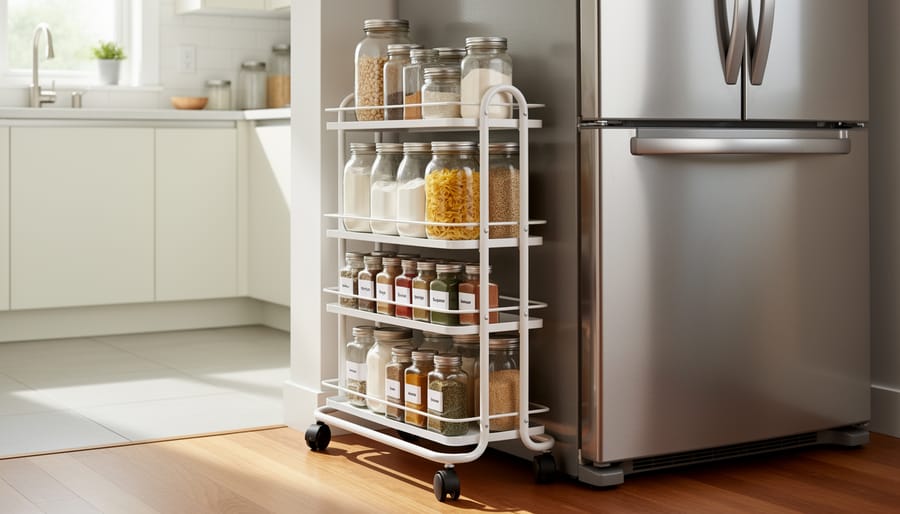
A narrow pantry cart is the unsung hero for kitchens where cabinet real estate runs out fast. Picture a slim, three- or four-tier cart, usually 6 to 10 inches wide, that slides into that awkward gap beside your refrigerator or between the counter and wall. It holds precisely the items you reach for daily: olive oil, vinegar, spice jars, canned tomatoes, pasta boxes, or snack packets.
Because the cart pulls out fully, you can see and grab everything without digging through deep cabinet shelves or stacking cans into precarious towers. Many models feature raised edges or wire baskets on each tier, which prevent bottles from tipping during movement and keep smaller items corralled. The wheels let you roll the entire setup away from the wall for cleaning or restocking, then tuck it back flush when you’re done.
This approach works especially well if your kitchen layout leaves dead space too narrow for traditional cabinetry. Instead of letting that six-inch strip collect dust, you gain vertical storage that doesn’t crowd your counters or block pathways. It’s the same smart, vertical thinking that makes under-sink storage and small bathroom storage solutions so effective in other tight spaces.
Choose a cart height that matches your counter or slightly lower, and pick a finish, metal, wood-look laminate, or white plastic, that blends with your existing kitchen palette. The result is accessible overflow storage that stays hidden in plain sight.
2. Mobile Coffee and Tea Station
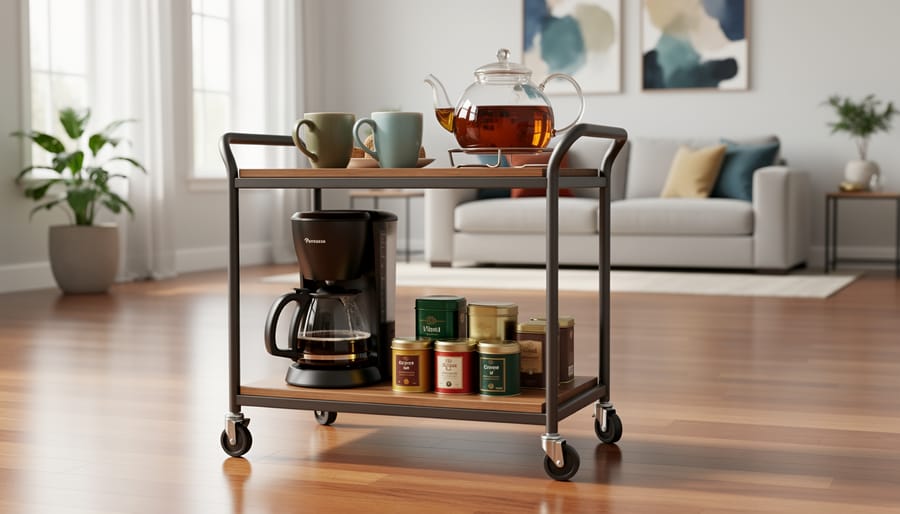
A dedicated beverage cart transforms a scattered morning routine into an organized ritual while reclaiming precious counter real estate. This setup works beautifully in studio apartments or galley kitchens where counter space runs scarce and every square inch matters.
The top tier typically accommodates a compact coffee maker or electric kettle, while lower shelves hold mugs, a selection of teas, coffee pods or grounds, sweeteners, and stirrers. Some people add a small French press, a milk frother, or a pour-over setup depending on their brewing preferences. The key advantage is portability, wheel the entire station to your dining table or breakfast nook during use, then roll it into a pantry alcove or against a wall when you’re done.
Choose a cart with at least two shelves to separate brewing equipment from dry goods. Metal carts with slatted shelves work well because spills drip through rather than pooling, and they’re easy to wipe down after coffee grounds or sugar scatter. If you prefer a warmer aesthetic, bamboo or wood-top carts add visual softness while still supporting small appliances.
This idea shines for remote workers who want their coffee setup separate from food prep areas, or for anyone who entertains and likes offering guests self-serve beverages without cluttering the main kitchen workspace. Adding a small bin or basket on the bottom shelf corrals filters, napkins, and other supplies that tend to migrate.
3. Bathroom Toiletries Organizer
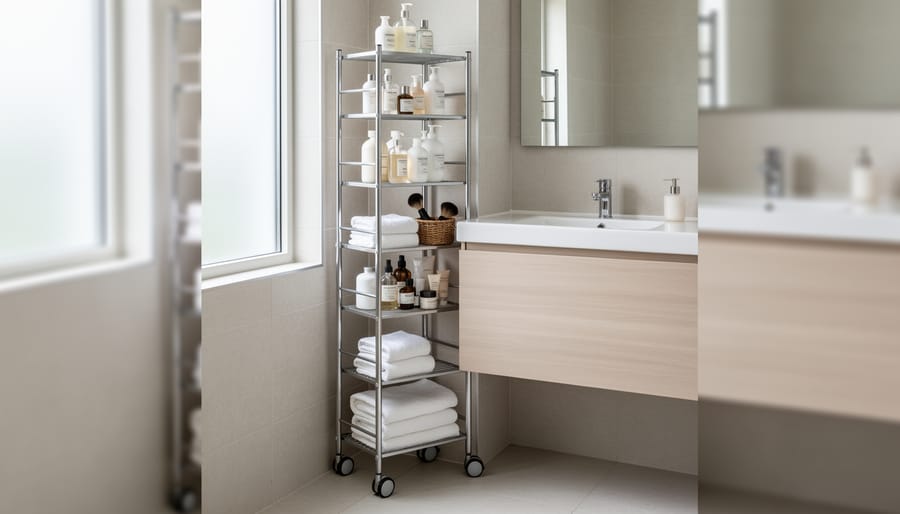
Bathrooms in small apartments or older homes rarely offer enough storage for everything you need within arm’s reach. A narrow rolling cart slides into those awkward gaps, between the toilet and vanity, beside the tub, or tucked against the wall near the shower, and turns dead space into functional storage.
Look for carts made from moisture-resistant materials like powder-coated metal, rust-proof stainless steel, or treated plastic. Bathrooms are humid environments, and the last thing you want is a cart with peeling paint or rust stains after a few months. Mesh or slatted shelves work better than solid surfaces because they allow air circulation and prevent water from pooling if you store damp washcloths or recently used bottles.
Use the top tier for daily essentials, face wash, toothbrush holder, hand lotion. Middle shelves can hold backup toiletries, hair styling tools, or skincare products you rotate through. The bottom tier is ideal for rolled towels, extra toilet paper, or cleaning supplies like glass cleaner and disinfectant wipes.
If your bathroom has limited floor space, choose a three-tier cart that’s no wider than 10 inches. You’ll gain vertical storage without blocking pathways or making the room feel cramped. Lock the wheels once the cart is positioned to prevent it from rolling when you grab items quickly, and wipe down shelves weekly to prevent soap residue or product buildup.
4. Craft Supply Caddy
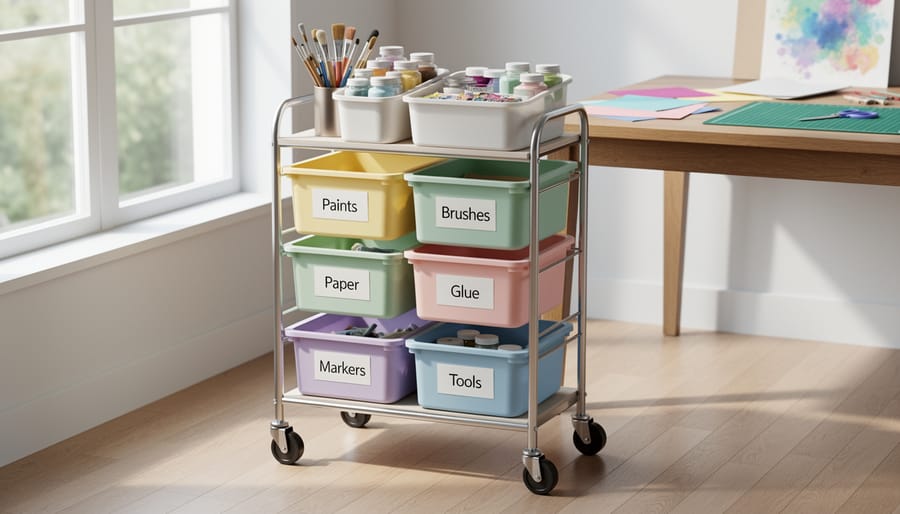
If you’ve ever abandoned a half-finished project because digging through scattered supplies felt like too much work, a craft supply caddy changes that dynamic completely. A rolling cart dedicated to your creative materials puts everything within reach and moves wherever inspiration strikes, next to a sunny window, onto the dining table for an afternoon session, or tucked beside the couch for evening stitching.
The beauty of this setup lies in containment with flexibility. Use clear bins on each tier to group materials by type: embroidery floss and needles on top, fabric scraps and patterns on the middle shelf, larger items like yarn skeins or paint bottles on the bottom. You can see what you have at a glance, which cuts down on duplicate purchases and the frustration of knowing you own the perfect shade of thread but can’t locate it. Label each bin if you work with multiple mediums or share the cart with kids.
For small spaces where a dedicated craft room isn’t an option, this cart becomes your portable studio. Roll it out when you’re working, wheel it into a closet or corner when you need the table back for dinner. The vertical stacking keeps your footprint minimal while holding a surprising amount, enough for active projects plus backup supplies. Choose a cart with sturdy shelves if you work with heavier materials like large sketchbooks or jars of paint, and look for models with a top surface flat enough to hold scissors, a cutting mat, or a current project tray. This isn’t just storage; it’s creative freedom on wheels.
5. Bedside Essentials Cart
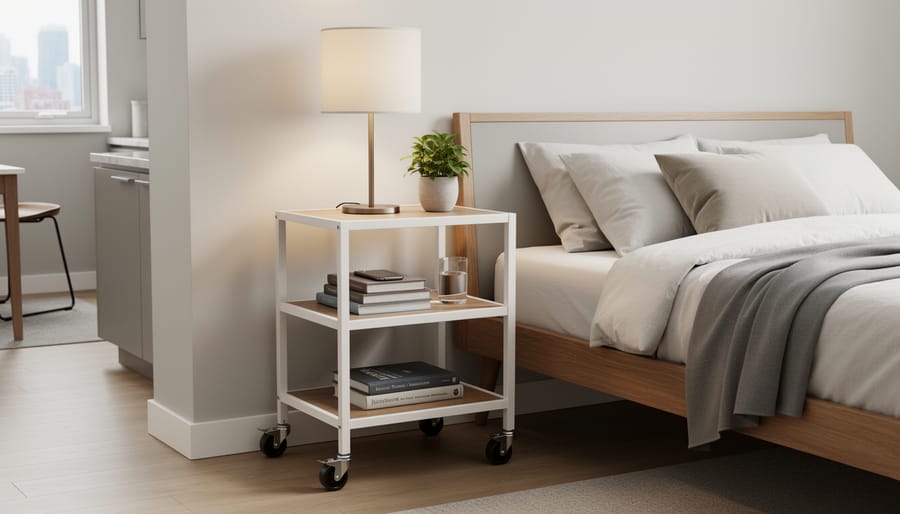
A bedside cart transforms your sleeping area without the bulk of a traditional nightstand. This is especially valuable in studio apartments or small bedrooms where every square foot counts and a standard nightstand would make the room feel cramped.
Choose a cart with two or three tiers, enough vertical storage to hold your essentials without overwhelming the space. The top shelf becomes your nightly landing zone: a water bottle, reading glasses, phone, and perhaps a small lamp or clip-on light. The middle tier can hold a few books, a journal, or a tablet, while the bottom shelf accommodates chargers, hand cream, or an eye mask.
Because the cart is mobile, you can pull it close when you’re in bed and push it slightly away when you need to move around the room. This flexibility is a game-changer in tight quarters. Some people roll the cart away entirely in the morning to open up floor space for yoga or getting dressed.
Look for carts with locking wheels so it stays put while you’re reaching for your alarm or setting down a mug. A cart with raised edges or a lip on each shelf prevents items from sliding off in the middle of the night. Metal or wood carts work well here, just avoid anything too wide that defeats the space-saving purpose.
6. Home Office Supply Station
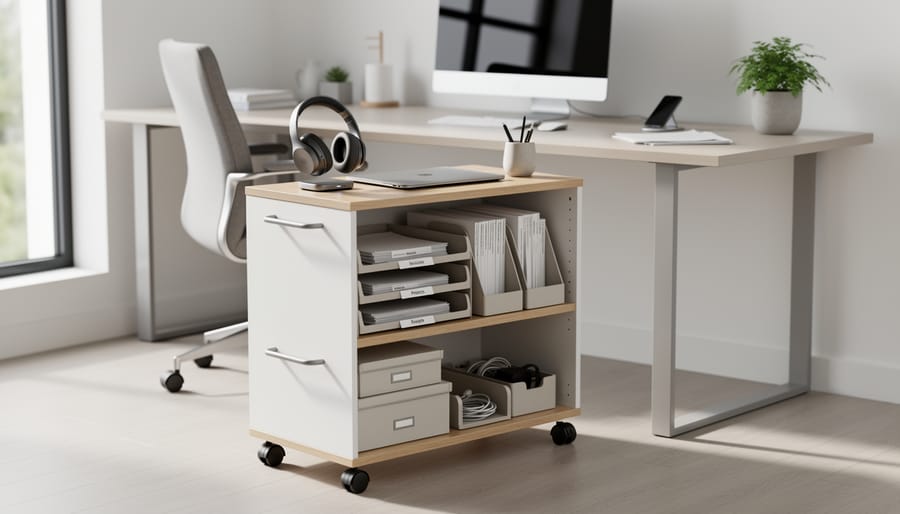
A dedicated rolling cart beside your desk transforms scattered office supplies into an organized, mobile command center. Position a two- or three-tier cart within arm’s reach to hold printer paper, notebooks, pens, sticky notes, and chargers, everything you grab throughout the workday without getting up. The vertical storage keeps your desk surface clear while maintaining easy access to essentials.
For multi-purpose rooms where your desk doubles as a dining table or craft station, this cart becomes transformative. At 5 p.m., wheel the entire setup into a closet or behind a door, instantly reclaiming your living space. No more shuffling files into drawers or stashing supplies in bags. The transition from work mode to home mode takes seconds.
Choose a cart with at least one solid shelf for loose papers and a basket or bin on the lower tier for cables and tech accessories. Metal carts with mesh sides offer visibility so you can spot what you need quickly, while wood-topped options provide a stable surface for a desk lamp or phone dock. If you’re working with limited square footage similar to challenges addressed in entryway storage solutions, look for slim profiles under 12 inches wide that slide into narrow gaps.
The beauty lies in portability. Roll your supplies to wherever you’re working that day, kitchen counter, balcony table, or living room floor, then tuck it all away without permanent furniture commitments.
7. Cleaning Caddy on Wheels
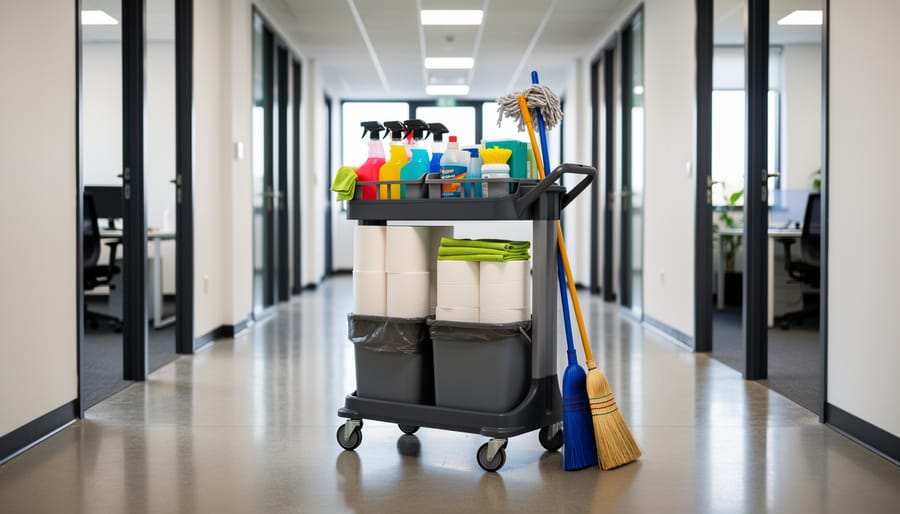
A wheeled cleaning caddy transforms what used to be a scattered collection of supplies into a portable command center. Instead of stashing duplicates under every sink or making repeated trips to the hall closet, you load everything onto one compact cart and wheel it wherever you need it.
Look for a cart with three tiers to create natural zones. Top shelf: daily sprays and disinfectants you grab most often. Middle tier: microfiber cloths, sponges, and scrub brushes organized in small bins or baskets. Bottom shelf: heavier bottles like floor cleaner, paper towels, or a caddy of specialty tools. This setup means you never dig through a jumbled cabinet hunting for glass cleaner while your other hand drips bathroom spray.
The real efficiency comes during cleaning sessions. Start in the bathroom, spray surfaces, roll to the bedroom to dust, then continue to the kitchen without backtracking. You save time and the physical effort of carrying armfuls of bottles between rooms. In small apartments where storage is tight, parking the cart in a narrow closet or beside the washing machine keeps supplies contained and out of sight.
Choose a cart with locking wheels so it stays put on tile or hardwood when you lean in to grab something. Wire or mesh shelves work better than solid surfaces because spills drain instead of pooling, and you can see inventory at a glance. A handle along the top tier gives you better control steering around furniture.
8. Entryway Catch-All Cart
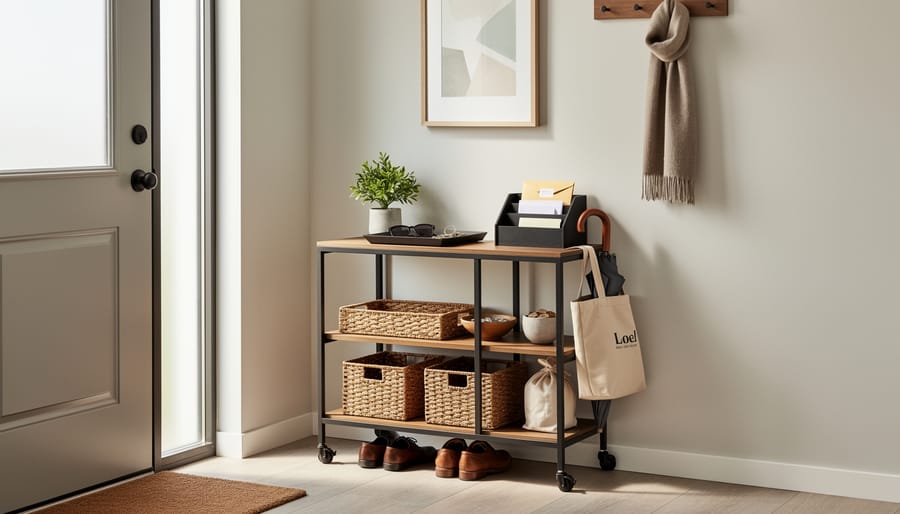
A compact rolling cart stationed near your front door transforms chaotic entryway clutter into an organized system that actually works. Instead of keys scattered across counters, mail piling up on surfaces, and bags dumped wherever they land, everything finds a designated spot on accessible shelves.
Choose a cart with at least three tiers to create zones: the top shelf for daily essentials like keys, sunglasses, and wallets; the middle tier for incoming mail, packages, and items that need action; and the bottom shelf for bags, dog leashes, reusable shopping totes, or seasonal accessories like scarves and hats. Small bins or baskets on each level keep similar items together and prevent the cart from looking chaotic.
The mobility factor is especially valuable in small entryways where space is at a premium. Roll the cart slightly to the side when you’re moving furniture or hosting guests, then return it to its spot without disrupting your organizational system. This flexibility beats fixed hooks or consoles that permanently consume floor space.
For maximum functionality, position the cart within arm’s reach of the door so you can grab essentials on your way out and deposit items immediately upon entering. Add a small tray on top to corral loose change and receipts, and consider a cart with at least one enclosed drawer or basket if you need to hide less attractive items like pet waste bags or spare batteries. This setup creates a landing zone that contains daily chaos without requiring extensive square footage.
Tips for Making the Most of Your Rolling Cart
Once you’ve chosen the perfect rolling cart for your space, a few strategic tweaks can transform it from functional to exceptional. Start by grouping items in baskets or bins rather than leaving them loose on shelves, this creates visual cohesion and prevents that cluttered, chaotic look that can make small spaces feel even tighter. Clear acrylic bins work beautifully if you want to see what’s inside at a glance, while fabric baskets soften the aesthetic and hide visual noise.
Labels are your friend, especially if multiple people share the space or if you’re using the cart for categories that might blur together over time. Simple adhesive labels or hanging tags keep everyone accountable and make restocking effortless. Pay attention to finishes, too, matching your cart’s metal, wood, or painted surface to existing furniture helps it blend seamlessly rather than stick out as an afterthought.
Lock those wheels when the cart’s in position. It sounds obvious, but a cart that shifts every time you grab something becomes frustrating fast, and wheel locks take two seconds to engage. Finally, think seasonally. Rotate what’s on your cart based on changing needs: swap craft supplies for holiday wrapping stations in December, or transition your entryway cart from winter scarves to summer sunscreen and hats. This flexibility is exactly why rolling carts excel in small spaces.
Frequently Asked Questions
What size cart works best for tight spaces?
Look for carts 10-18 inches wide that can slide into narrow gaps between appliances or furniture. Measure your available floor space first, then choose a cart at least 2 inches narrower to allow smooth rolling and easy access.
Are metal or plastic carts better for small spaces?
Metal carts typically support more weight and look sleeker in modern interiors, while plastic carts are lighter to move and better for humid bathrooms. Your choice depends on what you’ll store and where the cart will live, metal wins for kitchens and offices, plastic excels in bathrooms.
How do I keep a rolling cart from looking cluttered?
Use matching baskets or bins on each shelf to contain smaller items and create visual uniformity. Limit each tier to one category of items and resist the urge to stack things beyond the cart’s top edge.
Can rolling carts work on carpet?
Yes, but choose carts with larger wheels (at least 2 inches in diameter) designed for carpet use. Avoid low-profile casters that dig into pile, and expect slightly more effort when rolling compared to hard flooring.
What’s the weight limit for most small carts?
Most compact rolling carts safely hold 20-40 pounds total, with lighter-duty models maxing out around 15 pounds. Check manufacturer specifications before loading heavy appliances or books, and distribute weight evenly across shelves.
These practical answers help you make confident decisions when selecting and using rolling storage carts in your home. The right cart paired with smart organization transforms cramped quarters into functional, flexible spaces that adapt to your daily routines.
Small rolling storage carts aren’t just storage solutions. They’re flexibility tools that grow and shift with your daily life, your hobbies, and your spatial constraints. Whether you’re wrestling with a cramped kitchen, a bathroom that barely fits one person, or a studio apartment pulling double duty as office and living room, these mobile organizers deliver function without the commitment of built-ins or the clutter of static shelves.
The beauty of these carts lies in their adaptability. You’re not locked into one configuration or one location. Your coffee station can become a bar cart for entertaining. Your craft caddy can transform into gift-wrapping central during the holidays. Your cleaning supplies roll exactly where you need them, then disappear into a closet until next time.
Pick one or two ideas from this list that speak directly to your space struggles. Maybe it’s that narrow gap beside your fridge that’s been wasted, or the entryway chaos that greets you every day. Implement those solutions this week. You’ll quickly discover how a simple cart on wheels can reclaim square footage, reduce visual clutter, and make your small space work considerably harder for you.