
8 Foam Mattress Cleaning Methods That Actually Remove Stains and Odors
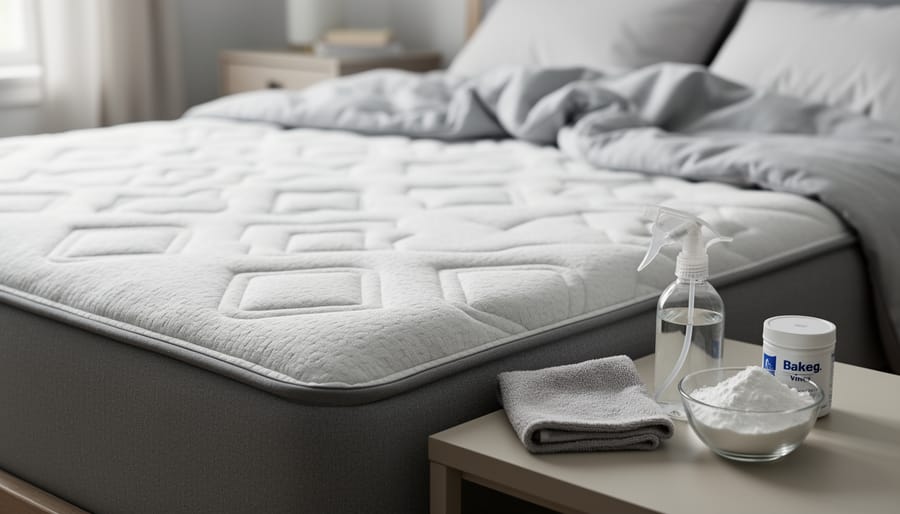
Cleaning a foam mattress the right way preserves its structure and extends its life, typically requiring just three household ingredients: mild detergent, white vinegar, and baking soda. Unlike traditional spring mattresses, foam materials demand gentler, low-moisture techniques because they absorb liquids easily and take hours to dry completely, creating the perfect environment for mold if you’re not careful.
Whether you’re tackling fresh coffee spills, dealing with stubborn odors, or maintaining your investment (memory foam mattresses now average $800 to $2,000 in 2026), the methods we’ve gathered from certified cleaning professionals focus on surface-level care rather than saturation. You’ll find the same principles that keep fabrics fresh apply here: work with the material’s nature instead of fighting it.
The biggest challenge? Most people use too much water. Foam’s open-cell structure traps moisture deep within, where air circulation can’t reach it. That’s why the eight methods ahead prioritize dry or barely-damp approaches, from enzyme sprays for biological stains to dry foam formulas that lift dirt without soaking through. We’ve also included product recommendations for 2026 that match real-world budgets and needs, so you can clean confidently without second-guessing your approach or accidentally voiding your warranty.
How We Chose These Foam Mattress Cleaning Methods
We partnered with certified cleaning specialists and interior design professionals to identify foam mattress cleaning methods that truly deliver results without damaging delicate foam structures. Each method in this guide underwent rigorous evaluation based on real-world performance, material safety, and practicality for 2026 home care needs.
Our selection criteria focused on several essential factors:
- Foam-safe formulas that won’t break down memory foam or gel foam materials
- Proven stain removal effectiveness on common issues like urine, sweat, and spills
- No-rinse convenience to prevent moisture saturation and structural damage
- Anti-allergen properties that address dust mites and bacteria without harsh chemicals
- Value for money, balancing effectiveness with accessibility for various budgets
We prioritized methods with independent testing feedback and professional endorsements. Products featured here reflect current 2026 availability and have been recognized by trusted sources for their specific applications on foam surfaces. This collaborative approach ensures you’re getting techniques that work in actual bedrooms, not just lab conditions.
1. Dry Cleaning Foam Spray for Quick Spot Treatment
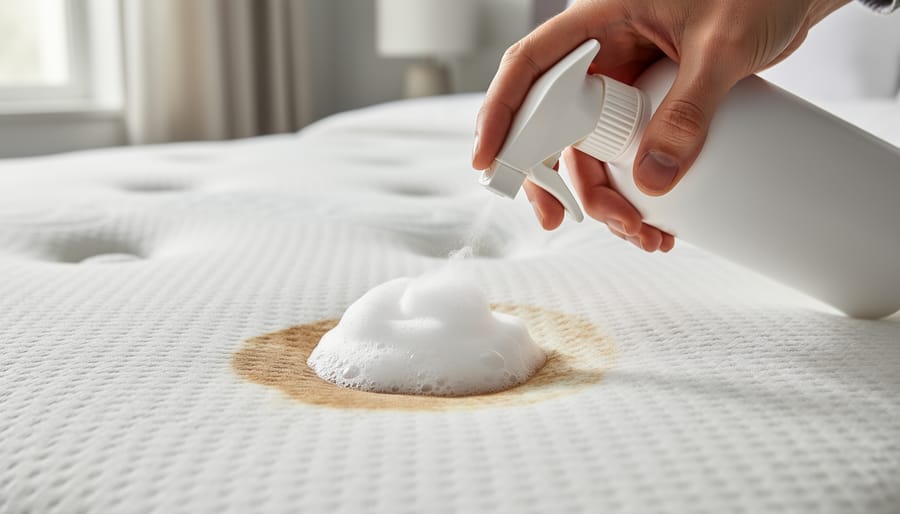
FilmFix Mattress Cleaner Foam Spray offers a no-mess solution for handling unexpected spills and stains on your foam mattress. This 10.14 fl. oz. product works specifically as a dry cleaning foam, meaning you can tackle fresh accidents without drenching your mattress in liquid that foam materials struggle to release.
The spray generates a thick foam that lifts stains away from the surface rather than pushing moisture deep into the mattress core. When dealing with urine, sweat stains, or those stubborn yellow discolorations that appear over time, the foam penetrates just enough to break down the stain while staying on the surface layer. That’s crucial for memory foam, which can take days to fully dry if saturated and may develop mildew in the process.
To use it effectively, shake the can well and apply the foam directly to the stained area. Let it sit for three to five minutes so the cleaning agents can work, then blot gently with a clean, dry cloth. You’ll notice the foam changing color as it absorbs the stain. The no-rinse formula means there’s no need to follow up with water, which protects the foam’s structure and eliminates the lengthy drying time that traditional cleaners require.
This method shines for spot treatments between deeper cleanings. Keep the can handy for middle-of-the-night accidents or morning coffee spills. The quick-drying nature means your mattress returns to service within an hour, not the day-long wait that wet cleaning demands.
2. Anti-Allergen Vacuum Cleaning for Deep Maintenance
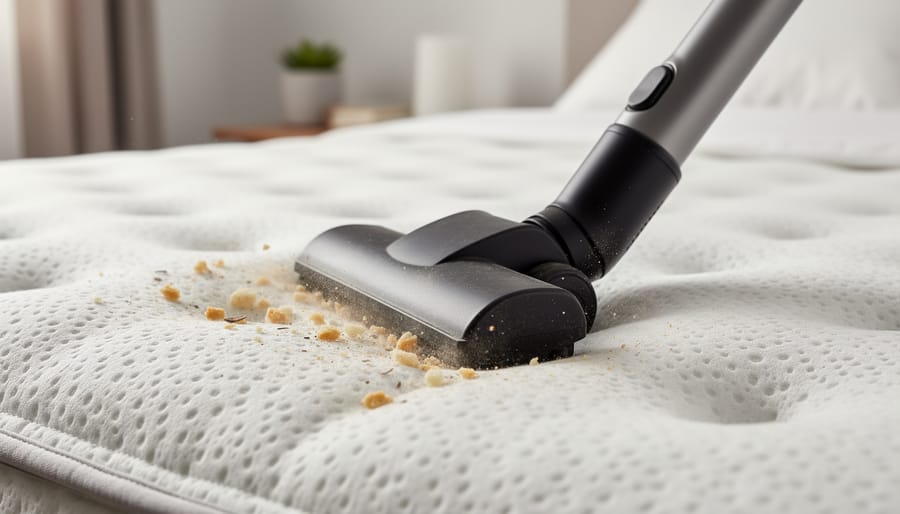
Regular vacuuming might sound basic, but specialized anti-allergen vacuum cleaning is one of the most effective ongoing maintenance methods for foam mattresses. The Jimmy Mattress Anti-Allergen Bed Vacuum Cleaner, priced at $126 on Amazon and identified as the best overall mattress cleaner by The Spruce, brings professional-grade cleaning power to your bedroom without the risks that come with liquid-based methods.
This approach works particularly well for foam because it’s completely dry. You’re removing accumulated dust mites, dead skin cells, allergens, and surface debris without introducing any moisture that could compromise your mattress’s structure. Foam materials are naturally porous, which means they trap particles deep within their layers over time. A specialized mattress vacuum uses powerful suction combined with UV light or heat elements to draw out what standard upright vacuums miss.
The beauty of this method lies in its preservation of foam integrity. Unlike scrubbing or saturating techniques, vacuum cleaning doesn’t compress the foam cells or create uneven surfaces. You’re simply lifting away contaminants that accumulate from nightly use.
Use anti-allergen vacuum cleaning every two to four weeks as part of your regular bedroom routine, and schedule a more thorough pass monthly if you have allergies, pets, or live in a humid climate. It’s also the perfect follow-up after spot-treating stains with other methods, once the area has dried completely, vacuum the entire surface to restore the foam’s texture and remove any residual cleaning product particles.
This isn’t about replacing deep stain removal when accidents happen. It’s about maintaining a cleaner baseline so those intensive cleaning sessions become less frequent.
3. Multi-Fabric Upholstery Cleaner for Budget-Conscious Care
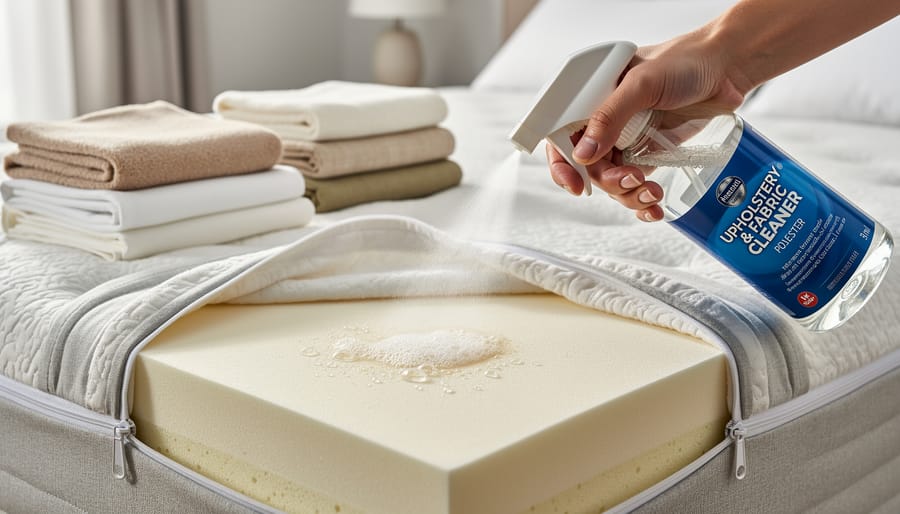
Resolve Multi-Fabric Cleaner and Upholstery Stain Remover earns its reputation as The Spruce’s best value pick for good reason. This wallet-friendly option tackles foam mattress stains without demanding a significant investment, making it ideal if you’re managing multiple surfaces on a tight budget.
What sets this cleaner apart is its genuine versatility. You’re not buying a single-purpose product. The same bottle works on your foam mattress cover, bedroom chairs, sofa cushions, and even car upholstery. That flexibility matters when you’re trying to keep every fabric surface in your home fresh without stockpiling specialized cleaners.
For foam surfaces, application requires a lighter touch than you’d use on carpet. Start by spot-testing an inconspicuous area, especially with memory foam covers. Spray the cleaner lightly onto the stained section without saturating the fabric. Let it penetrate for two to three minutes while the formula loosens the stain. Then blot, don’t rub, with a clean white cloth. Rubbing pushes moisture deeper into foam layers where it struggles to dry.
Work in sections rather than spraying the entire mattress surface at once. This controlled approach prevents over-wetting, which foam absolutely hates. After blotting, allow the treated area to air dry completely before remaking your bed. Position a fan nearby or open windows to speed the process.
The cost advantage becomes clear when you calculate price per use across multiple applications and surfaces. You’ll stretch a single bottle across months of spot treatments, making this method particularly smart for households with kids or pets.
4. Baking Soda Absorption Method for Odor Neutralization
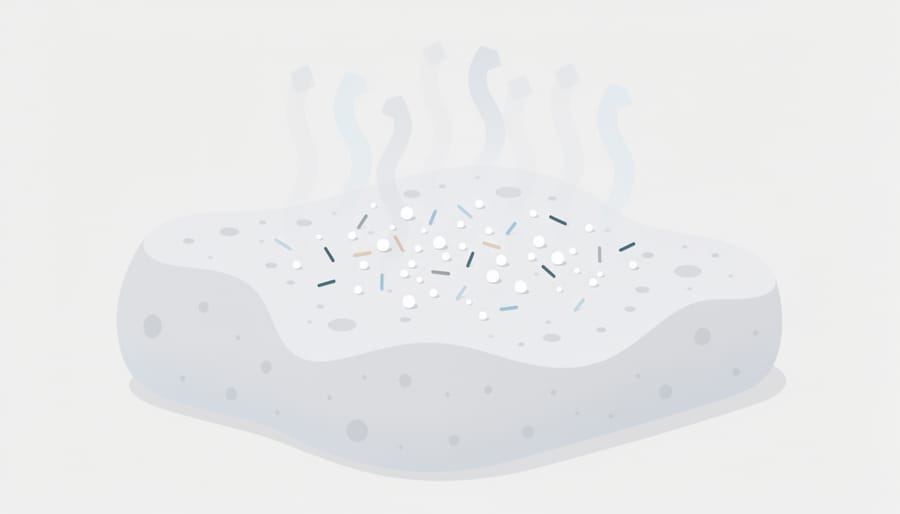
Baking soda remains one of the safest, cheapest ways to tackle odors trapped in foam mattresses. It works through simple chemistry, the fine powder creates a massive surface area that pulls moisture and odor molecules out of the foam’s cells and neutralizes them on contact.
Start by stripping your mattress completely. Use a fine-mesh sieve or flour sifter to distribute a thin, even layer of baking soda across the entire sleeping surface. You want consistent coverage without thick clumps, which can be tricky to vacuum out later. A standard box covers a twin mattress; double that for queen or king sizes.
Let the baking soda sit for at least eight hours, though overnight works even better. This dwell time allows the powder to penetrate the top foam layer and absorb musty smells, body oils, and lingering moisture. For particularly stubborn odors, think spilled drinks or pet accidents, leave it for 24 hours if your schedule permits.
When you’re ready to vacuum, use your upholstery attachment on the lowest suction setting. Work in overlapping passes to lift all the powder without grinding it deeper into the foam. Lingering traces won’t hurt anything, but they’ll feel gritty against sheets.
This method shines for monthly maintenance between deeper cleanings. It can’t tackle visible stains, but for general freshness and moisture control, nothing beats the cost-per-use ratio. Keep a dedicated box in your cleaning closet for mattress refresh days.
5. Enzyme-Based Cleaners for Organic Stains
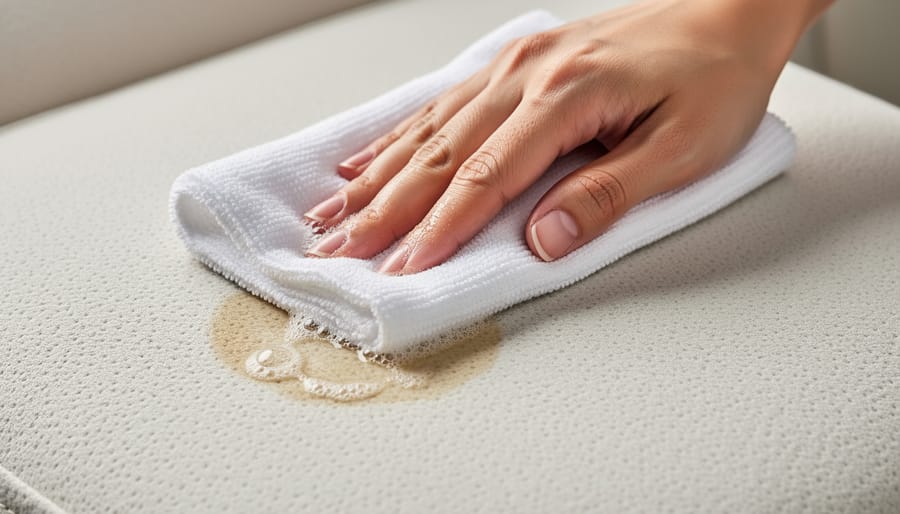
Enzyme cleaners target the root cause of organic stains rather than just masking them. When your foam mattress faces urine accidents, sweat marks, or blood spots, these specialized formulas use naturally occurring enzymes to literally digest the proteins and organic compounds that create both the stain and the smell.
The chemistry here works in your favor: enzymes are biological catalysts that break down specific molecules without harsh scrubbing or abrasive chemicals that could tear or degrade foam structure. Unlike bleach or ammonia-based cleaners that can yellow or weaken memory foam, enzyme products work gently at a molecular level. This makes them perfect for foam materials that can’t tolerate aggressive treatments.
Look for extra-strength formulations designed specifically for biological stains. These products typically contain multiple enzyme types, proteases for protein-based stains, amylases for starches, and lipases for oils from body sweat. The combination tackles the full spectrum of organic matter your mattress encounters.
Application is straightforward but requires patience. Blot up any fresh liquid first, then saturate the stained area with the enzyme cleaner without soaking through to deep foam layers. The enzymes need time to work, let the product sit for 10 to 15 minutes as directed on the label. Don’t wipe it away too soon; you’re giving the enzymes time to break down the stain completely.
After the dwell time, blot with a clean, damp cloth to lift away the dissolved organic matter. Air-dry thoroughly before remaking the bed. For stubborn stains, a second application often finishes what the first started, delivering results that simple soap and water can’t match.
6. Gentle Steam Cleaning with Distance Technique
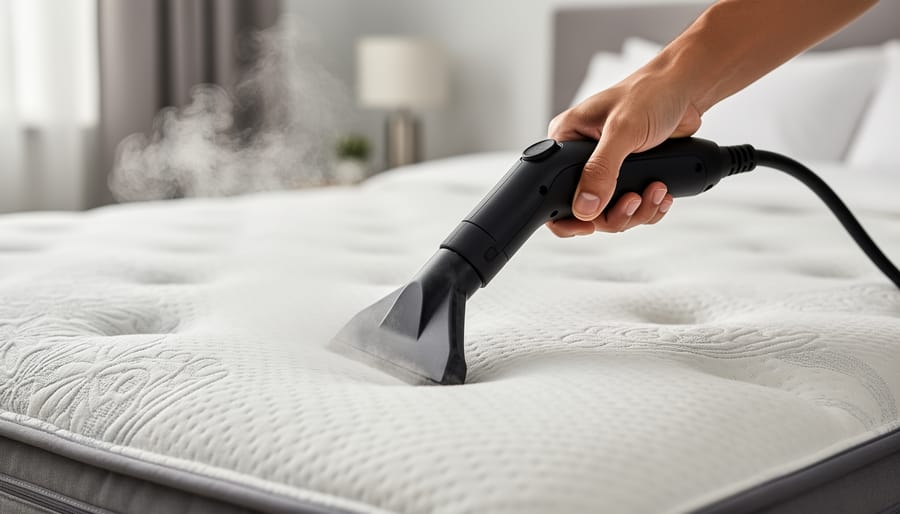
Steam cleaning offers powerful sanitization for foam mattresses when you apply it carefully. Unlike traditional mattresses that can handle direct steam contact, foam requires a gentler touch to avoid permanent damage or moisture buildup inside the material.
Hold your handheld garment steamer or upholstery steamer 6 to 8 inches away from the mattress surface. This distance lets the heat and moisture sanitize the top layer without forcing water deep into the foam’s cellular structure. Move the steamer slowly in sweeping motions across each section, spending just 3 to 5 seconds per area. The steam kills dust mites, bacteria, and common allergens on contact, making this method particularly valuable for households dealing with allergies or asthma.
Timing matters significantly with steam cleaning. Work on one section at a time, then immediately blot the area with clean, dry microfiber towels to absorb any surface moisture. Point a fan directly at the mattress and let each section air for 20 to 30 minutes before steaming the next area. Some foam types, especially dense memory foam and gel-infused varieties, can trap moisture for hours or even days if you overdo it.
Skip steam entirely if your mattress has a “do not wet” tag or if the manufacturer specifically advises against moisture. Latex foam and lower-density foams typically handle controlled steam better than high-density memory foam. When in doubt, test an inconspicuous corner first and wait 24 hours to check for any texture changes or lingering dampness before treating the entire surface.
7. White Vinegar Mist for Mild Disinfection
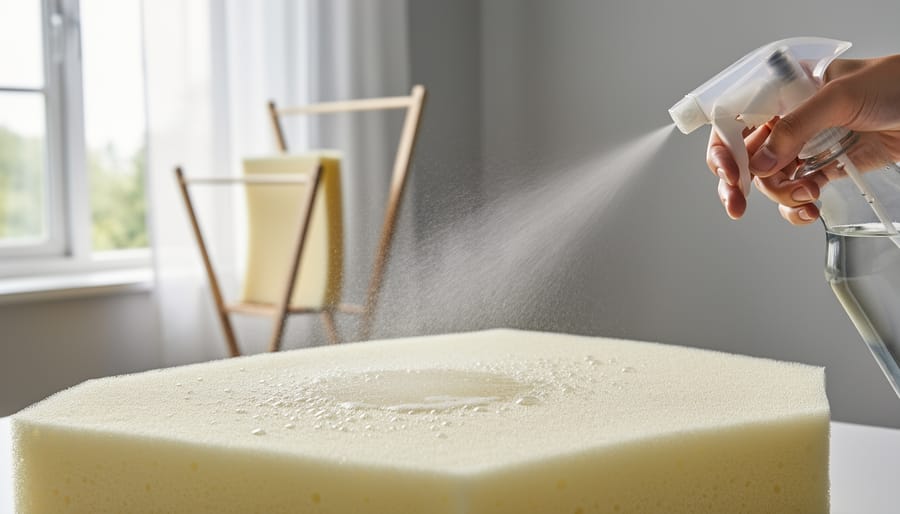
White vinegar offers a gentle, natural way to freshen foam mattresses without harsh chemicals. Mix equal parts distilled white vinegar and water in a clean spray bottle, creating a 50/50 solution that’s mild enough for memory foam yet effective against light odors and bacteria.
The key to this method is application technique. Hold the spray bottle 8 to 10 inches from the mattress surface and apply a fine mist, never a heavy spray. You want the surface barely damp, not wet, because foam absorbs moisture easily and takes hours to dry. Work in small sections, lightly misting areas that smell stale or need refreshing.
Vinegar works because its acidity disrupts bacterial cell membranes and neutralizes alkaline odor molecules, all while being safe for foam’s cellular structure. Unlike bleach or ammonia-based cleaners that can break down foam, vinegar won’t compromise the material’s support properties. The smell dissipates as it dries, taking unwanted odors with it.
After misting, allow the mattress to air-dry completely in a well-ventilated room, ideally with windows open or a fan running. This typically takes two to four hours for a light application. Never cover or use the mattress while damp, as trapped moisture breeds mold. This same gentle approach applies when you wash blankets safely treating delicate materials with care and proper drying time.
8. Professional-Grade Mattress Protector and Prevention
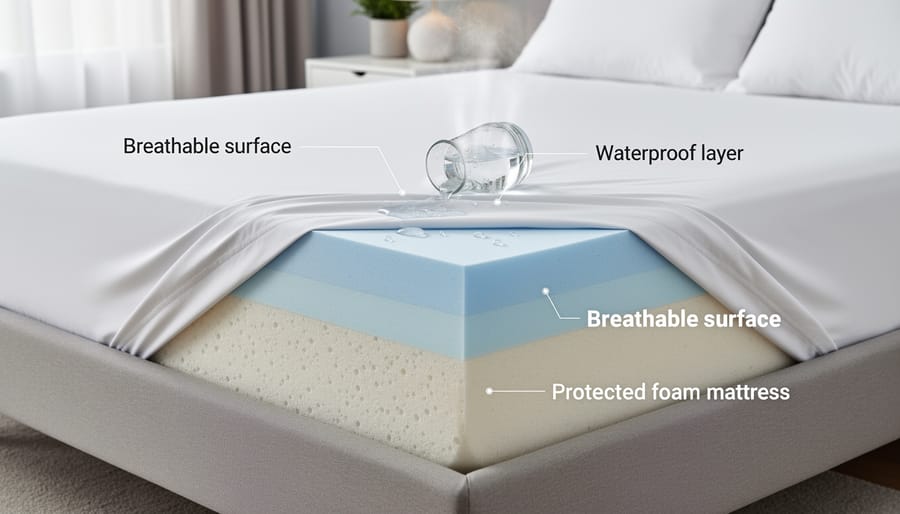
The smartest cleaning method is the one that keeps your foam mattress from needing aggressive treatment in the first place. A quality mattress protector creates a barrier between spills, sweat, and body oils and your foam layers, dramatically reducing how often you’ll need to break out cleaning solutions.
Look for protectors that are both waterproof and breathable. The waterproof backing stops liquids from penetrating into memory foam or gel foam, while breathability prevents the heat-trapping effect that ruins the sleep experience. This combination matters especially for foam mattresses like the DreamCloud Hybrid or Zinus Green Tea Memory Foam models, which rely on airflow and temperature regulation for comfort.
Most modern protectors zip completely around your mattress or fit like a fitted sheet with deep pockets. Choose one you can easily remove and clean a mattress cover every month or two. This regular washing cycle handles the surface-level maintenance that would otherwise require spot-treating the foam itself.
By catching accidents before they reach the foam, you extend your mattress’s lifespan by years. You’ll save time, preserve the foam’s structural integrity, and avoid the tricky drying periods that foam materials demand. Prevention takes five minutes to set up and eliminates hours of future remediation work.
Keep your protector handy where you store cleaning supplies so replacing it after washing becomes part of your routine rather than a forgotten task.
What Makes Foam Mattresses Different When Cleaning
Foam mattresses demand a completely different cleaning approach than traditional innerspring models because their cellular structure traps moisture like a sponge. When you deep clean a mattress made from memory foam or gel foam, excess water penetrates deep into the material where it can’t easily evaporate, creating ideal conditions for mold and mildew growth within 24-48 hours.
The open-cell structure of memory foam breaks down when exposed to harsh chemicals like bleach or ammonia-based cleaners. These substances dissolve the polymer bonds that give foam its supportive properties, leaving permanent indentations and reducing the mattress’s lifespan by years. Certified cleaning specialists consistently recommend pH-neutral, foam-safe products that clean without chemical degradation.
Surface-only cleaning protects foam integrity while still removing stains and odors effectively. Unlike traditional mattresses where liquid can drain through coils, foam holds moisture in place. This means your cleaning technique must focus on the top layer using spray applications, gentle blotting, and absorbent materials rather than soaking or scrubbing motions. Proper drying time becomes critical, rushing this step invites the very problems you’re trying to prevent through cleaning.
Common Foam Mattress Cleaning Questions Answered
Can I use regular carpet cleaner on my foam mattress?
No, most carpet cleaners contain harsh chemicals and produce excessive moisture that can damage foam structure and lead to mold growth. Stick with foam-safe products specifically designed for mattresses.
How long does a foam mattress take to dry after cleaning?
Surface cleaning typically requires 2-4 hours with good airflow, but deeper moisture may need 8-12 hours or longer. Never cover or sleep on a damp foam mattress, as trapped moisture creates ideal conditions for mildew.
Are machine-washable foam covers worth buying?
Absolutely. Removable, washable covers protect the foam itself from stains and allergens, making regular maintenance much simpler and reducing how often you need to deep-clean the mattress.
How often should I deep-clean my foam mattress?
Every 3-6 months for routine maintenance, or immediately after spills and accidents. Light vacuuming and baking soda treatments can happen monthly to keep things fresh between deeper cleans.
When should I call a professional instead of cleaning it myself?
Contact a certified mattress cleaning specialist for severe mold growth, large liquid spills that have fully saturated the foam, persistent odors after multiple cleaning attempts, or if you’re uncomfortable working with delicate memory foam materials.
The questions above reflect what homeowners ask most when they’re standing in front of a stained foam mattress at 2 a.m. Getting these answers right means the difference between a successful cleaning and a ruined mattress. Patience matters here, rushing the drying process or using the wrong products causes more problems than the original stain. When in doubt, test any new cleaning method on a small, inconspicuous area first, and remember that foam mattresses reward gentle, consistent care over aggressive scrubbing.
Keeping your foam mattress clean doesn’t have to be complicated or stressful. With these eight methods in your cleaning toolkit, you can tackle everything from quick spills to stubborn stains and lingering odors. The key is matching the right technique to your specific situation: reach for enzyme cleaners when dealing with biological stains, use baking soda for routine deodorizing, and rely on dry cleaning foams for spot treatments that won’t saturate your mattress.
Remember that foam requires gentler care than traditional innerspring mattresses, so always choose products specifically safe for foam materials and avoid over-wetting. Regular maintenance, combined with a quality mattress protector, will minimize the need for deep cleaning sessions down the road. Your mattress is one of the most important investments in your home, directly affecting your sleep quality and overall health. By dedicating just a few minutes to proper care, you’ll extend its life and create a cleaner, fresher sleeping environment for years to come.