
How to Wash Weighted Blankets Safely and Keep Them Fresh
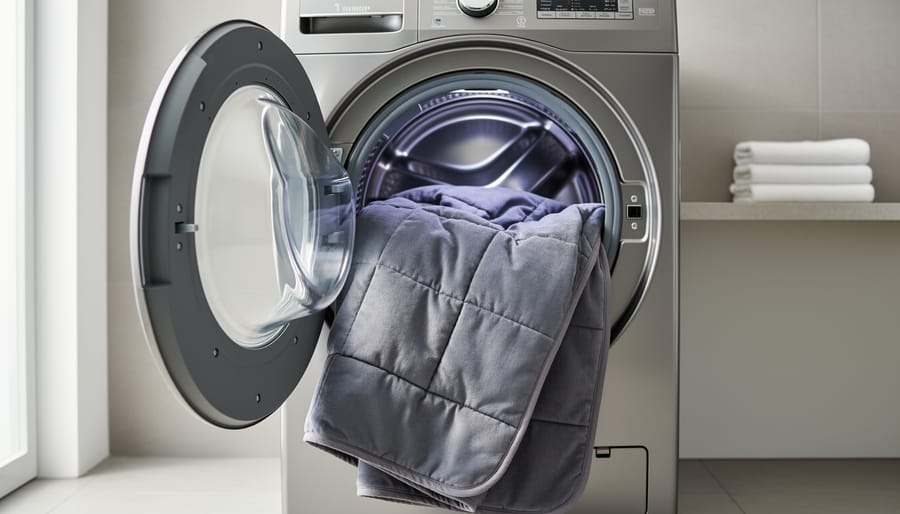
Washing a weighted blanket safely requires just a large-capacity machine, mild detergent, and a low-heat drying method. Most weighted blankets under 20 pounds can be machine washed on a gentle cycle, but you’ll need to verify your blanket’s care label first and confirm your washer can handle the load without straining the motor or drum. The key is protecting the internal fill (usually glass beads or plastic pellets) and maintaining even weight distribution throughout the cleaning process.
Here’s why this matters: weighted blankets collect dust, oils, and allergens just like regular bedding, but their construction makes them trickier to clean. The pocketed compartments that keep fill evenly distributed can shift or tear if agitated too roughly, and overloading a standard washer can damage both the machine and the blanket. We’ve worked with textile care professionals to develop a straightforward cleaning approach that addresses these concerns without requiring expensive equipment or special skills.
The good news? You can absolutely wash your weighted blanket at home. Whether you choose machine washing for convenience or hand washing for extra care, the process takes about two to three hours from start to finish (including drying time). The reward is a fresh, hygienic blanket that maintains its therapeutic benefits and structural integrity for years to come. Let’s walk through exactly what you’ll need and how to execute each step safely.
What You’ll Need to Wash Your Weighted Blanket
Before you toss your weighted blanket into the washer, gather everything you’ll need to do the job right. Having these supplies on hand prevents mid-wash scrambling and helps protect both your blanket and your machine.
Essential supplies:
- Mild liquid detergent (free from bleach, fabric softener, and harsh chemicals)
- Access to a large-capacity washing machine (ideally 4.5+ cubic feet for blankets over 15 lbs)
- Clean bathtub or large basin (for hand-washing heavier or delicate blankets)
- Three to four wool dryer balls (to prevent clumping and speed drying)
- Large drying space or outdoor clothesline (for air-drying)
Optional but helpful items:
- Stain remover or gentle spot-cleaning solution
- Soft-bristled brush for pre-treating spots
- White vinegar (natural odor eliminator and fabric softener alternative)
- Mesh laundry bag (for smaller weighted blankets under 10 lbs)
- Folding drying rack with reinforced bars
Check your detergent label carefully, you want something gentle enough for the blanket’s outer fabric but effective at removing body oils and odors. Skip the fabric softener entirely, as it can coat glass beads or plastic pellets and reduce the blanket’s breathability. If your home washer seems too small or your blanket exceeds 20 pounds, plan a trip to a laundromat with commercial-sized front-loaders. These larger machines handle the weight better and reduce strain on the drum and motor.
Before You Start: Check Your Blanket’s Care Label
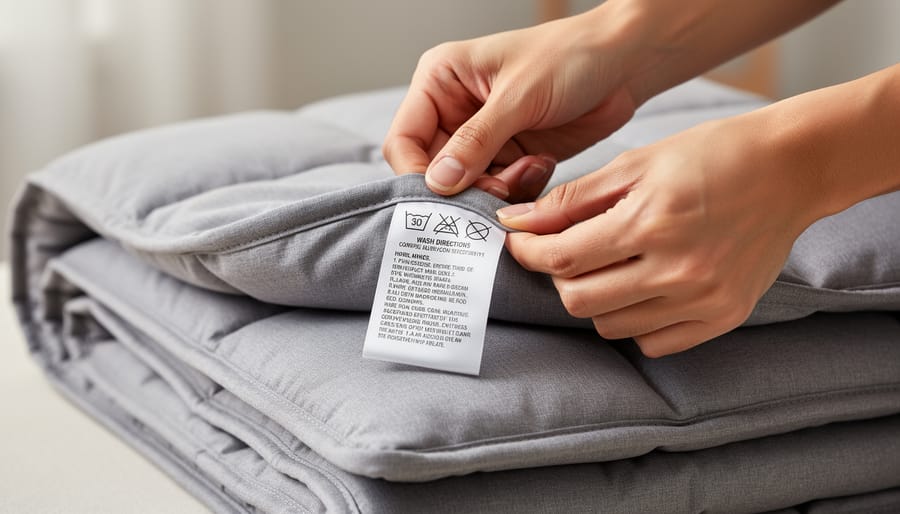
Before you fill your washing machine or bathtub, grab your weighted blanket and hunt down its care label. This small tag, usually sewn into a side seam or corner, holds crucial information that determines whether you can safely wash at home or need to call in the professionals.
The care label typically displays washing temperature limits, cycle recommendations, and drying instructions using universal laundry symbols. Look for a bucket icon (wash settings), a triangle (bleach guidance), a square with a circle (dryer instructions), and an iron symbol. If you spot a circle inside a square, that means dry-clean only. Some labels spell everything out in plain text, which makes your job easier.
Pay close attention to the fill material listed on the label or product packaging. Glass beads are durable and machine-washable in most cases, as are plastic poly pellets. Steel shot beads tolerate water well but add serious weight, often pushing blankets beyond home washer capacity. Organic fills like rice, beans, or sand should never get wet, they’ll spoil, clump, or create a mildewed mess.
Fabric type matters just as much. Cotton, polyester, and microfiber blends generally handle machine washing. Minky, velvet, and other plush fabrics often require gentler hand-washing or professional care to avoid matting. Check for any special coatings or treatments that water might damage.
If your label has faded or disappeared entirely, contact the manufacturer directly. Most brands provide care instructions on their websites or through customer service. Guessing wrong could cost you a $100+ blanket, so it’s worth the five-minute email.
When in doubt about any aspect of the care label, err on the side of caution and choose the gentlest cleaning method available.
Important Safety and Damage Prevention Tips
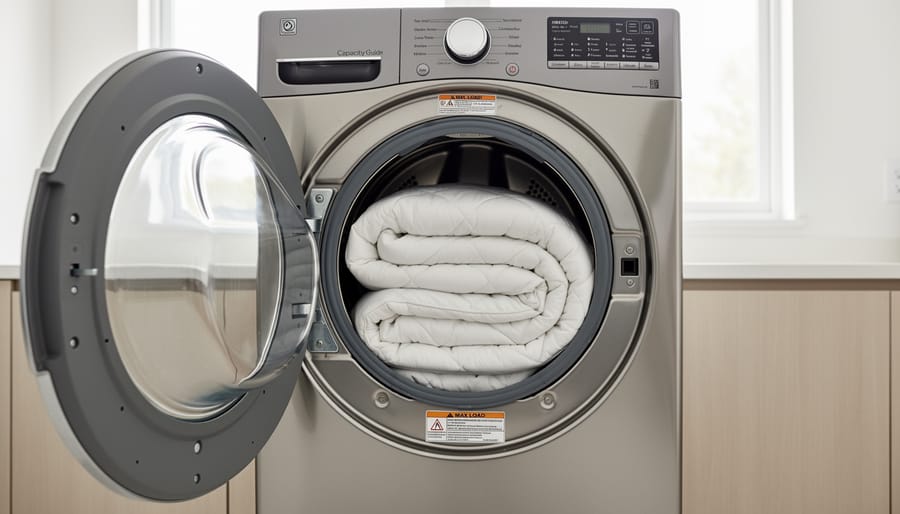
Before you toss your weighted blanket into the washer, take a few minutes to assess potential risks. Most home washing machines can handle 15 to 20 pounds safely, but many weighted blankets exceed this limit. Overloading can strain the motor, damage the drum bearings, or cause an unbalanced spin cycle that walks your machine across the floor. Check your blanket’s weight, if it’s heavier than your machine’s capacity, you’ll need to use a commercial washer at a laundromat or opt for hand-washing.
Inspect your blanket thoroughly before washing. Run your hands along all seams, checking for loose stitching, small tears, or weak spots where beads might escape during agitation. Even a tiny opening can turn into a catastrophic failure mid-cycle, spilling fill material throughout your washer and potentially clogging the drain pump. If you find damage, repair it with a needle and heavy-duty thread before proceeding, or consider professional cleaning.
Some blankets simply aren’t candidates for home washing. If your care label specifies dry-clean only, if the outer fabric is delicate silk or velvet, or if the fill contains organic materials like sand or rice, skip the washer entirely. These materials require gentler methods to clean without damage. When in doubt, hand-washing or professional textile care is always the safer choice.
Step-by-Step: How to Machine Wash Your Weighted Blanket
Choosing the Right Washer and Settings
The type of washing machine you use significantly impacts how safely your weighted blanket comes through the wash cycle. Front-loading machines are generally the better choice because they tumble clothes rather than agitating them with a central spindle, which reduces stress on seams and filling. Top-loaders with agitators can snag fabric and cause uneven distribution of the weighted fill. If you have a newer top-loader without an agitator (an impeller-style machine), it can work well for blankets under the weight limit.
For blankets heavier than 15 pounds, a commercial laundromat washer is your best option. These machines handle 20-25 pound loads comfortably and have larger drums that allow proper movement during the cycle.
Set your machine to cold or warm water depending on fabric type. Cotton and most blends tolerate warm water, while minky, fleece, and synthetic covers require cold to prevent pilling or shrinkage. Always select the gentle or delicate cycle to minimize agitation. Avoid heavy-duty or normal cycles, which use aggressive spinning that can damage seams or redistribute fill unevenly. Skip the extra rinse unless your detergent specifically requires it, as excessive water weight stresses the blanket unnecessarily.
Loading and Running the Wash Cycle
Place your weighted blanket in the washer by itself, no towels, sheets, or other items. Adding extra laundry throws off the weight distribution and can strain your machine. Spread the blanket evenly around the drum rather than bunching it on one side. This helps the washer maintain balance during the spin cycle.
Add your mild detergent according to the bottle’s instructions for a large load, but err on the side of less rather than more. Skip fabric softener entirely. It coats the filling and fabric, reducing breathability and potentially making the blanket feel sticky or attracting more dust over time.
Start the cycle and stay nearby for the first few minutes. Listen for unusual thumping or grinding sounds that signal an unbalanced load. If your machine stops mid-cycle or displays an error code, redistribute the blanket manually and restart. Some weighted blankets naturally trigger balance sensors because of their concentrated weight. If this happens repeatedly, you may need a larger-capacity machine at a laundromat.
Once the cycle completes, remove the blanket promptly to prevent mildew from developing in the damp folds.
Step-by-Step: How to Hand Wash Your Weighted Blanket
Hand washing is the safest option for weighted blankets under 15 pounds, those with delicate covers, or any blanket whose care label specifies hand-wash only. While it requires more effort than tossing your blanket into a machine, hand washing gives you complete control over the process and virtually eliminates the risk of damage to fill distribution or fabric integrity.
Your bathtub is the ideal workspace, it provides enough room to submerge and agitate a weighted blanket without cramping or folding it awkwardly. Start by filling the tub with cool to lukewarm water, never hot, which can damage both fabric and certain fill materials like organic options. Add a small amount of mild detergent as the tub fills, using your hand to distribute it evenly through the water.
- Place the weighted blanket in the water and press down gently to submerge it completely, allowing the fabric to absorb water evenly.
- Let the blanket soak for 15-20 minutes to loosen dirt and oils without excessive manipulation.
- Use your hands to gently agitate the blanket, working in sections and paying extra attention to any visibly soiled areas. Avoid wringing, twisting, or pulling the fabric.
- Drain the soapy water and refill the tub with clean, cool water for the first rinse cycle.
- Press the blanket repeatedly to work out the detergent, then drain and repeat the rinse process at least twice more until water runs clear and no soap residue remains.
- Press down firmly on the blanket to expel as much water as possible without wringing. The goal is to reduce weight before moving it.
For spot-cleaning minor stains between full washes, dampen a clean cloth with a mixture of water and a few drops of mild detergent. Blot the stained area gently, working from the outside in, then use a second damp cloth with plain water to remove soap residue. Press with a dry towel to absorb moisture.
Drying Your Weighted Blanket Properly
Drying your weighted blanket correctly is just as important as washing it, improper drying can lead to mildew, clumped filling, or heat damage to delicate materials. Your first decision is whether to air-dry or machine dry, and that choice depends on your blanket’s fill material and fabric type.
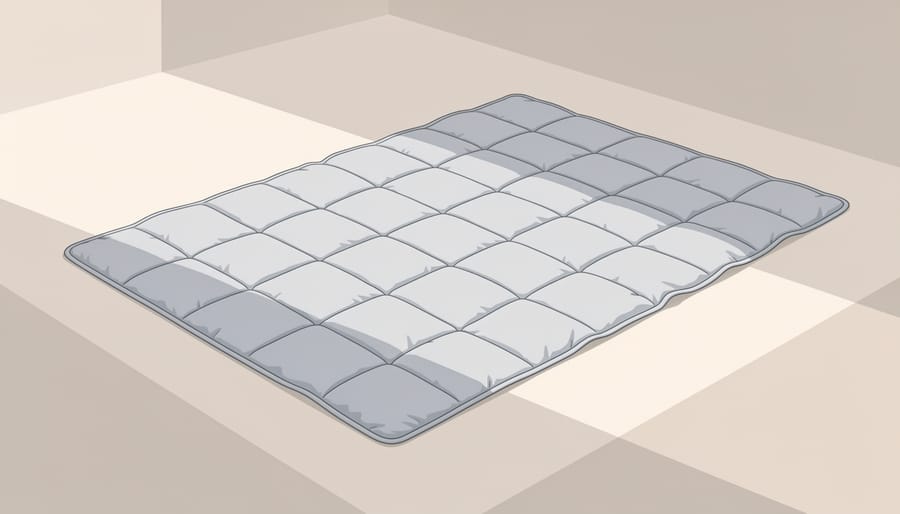
Air-drying is the gentlest option and works for nearly any weighted blanket. Lay your blanket flat on a clean surface outdoors or across multiple drying racks, repositioning it every few hours to expose all areas to air. This method takes 24 to 48 hours depending on humidity and thickness, but it eliminates heat-related risks. Indoor air-drying works too if you have space and good ventilation, though it typically takes longer.
If you’re machine drying, choose the lowest heat setting or a no-heat air-dry cycle. High heat can melt synthetic fills like plastic poly pellets, shrink fabric, or weaken adhesives in some blanket constructions. Add three or four dryer balls to the load, they bounce around and break up clumps as the filling shifts during drying. Run the dryer in 20-minute intervals, removing the blanket between cycles to shake it out and redistribute the fill manually. Expect machine drying to take two to three hours total for a full-size weighted blanket.
To ensure your blanket dries thoroughly and safely:
- Check multiple spots by feeling deep into the fabric layers, surface dryness can hide moisture inside
- Never use fabric softener sheets, which leave residue on filling pockets
- Avoid over-drying in high heat, which degrades fabric and damages elastic fibers
- Don’t fold or store the blanket until completely dry to the touch everywhere
- Skip the dryer entirely for blankets with organic fills like rice or buckwheat hulls
A fully dry blanket should feel uniformly cool to the touch with no damp spots or musty smell. Any lingering moisture creates the perfect environment for mold growth, so take your time with this final step.
Verify Your Blanket Is Clean and Undamaged
Once your weighted blanket finishes drying, resist the urge to immediately put it back on your bed. A thorough post-wash inspection catches potential problems before they become bigger issues and confirms your cleaning efforts succeeded.
Start by laying the blanket flat on a clean surface and running your hands across every section. The filling should feel evenly distributed with no heavy clumps in corners or thin spots in the middle. Gently shake the blanket and listen, rattling or shifting sounds may indicate broken seams or displaced fill material.
Examine all seams carefully, paying special attention to corners and edges where stress concentrates during washing. Look for loose threads, small tears, or separation between fabric panels. Press your nose close to different areas of the blanket and sniff for any musty or damp odor, which signals incomplete drying and potential mildew growth. The fabric should feel completely dry to the touch, not cool or clammy.
Check that the outer cover sits smooth without bunching, and verify any removable duvet covers reattach properly. This final inspection ensures your blanket returns to service in optimal condition, and it pairs well with your routine to deep clean bedding for a thoroughly refreshed sleep environment.
Common Problems and How to Fix Them
Even with careful washing, you might encounter a few hiccups. Here’s how to address the most common problems.
Clumped or Shifted Filling: If the beads or fill have bunched into corners or specific areas, lay the blanket flat on a clean floor or large bed. Starting from the clumped section, gently work the filling back toward empty areas with your hands, using small circular motions. This redistribution process works best when the blanket is completely dry. For stubborn clumps, place the blanket in the dryer on air-fluff (no heat) for 10-15 minutes with dryer balls, the tumbling action helps break up clusters without damaging the fabric.
Lingering Odors: If your blanket still smells musty after washing, it likely wasn’t dried thoroughly. Rewash using half a cup of white vinegar in the rinse cycle (skip the detergent this time), then ensure complete drying, this can take 3-4 hours on low heat or a full day air-drying. Between washes, keep items fresh by hanging the blanket outdoors in sunlight for 2-3 hours.
Minor Seam Separation: Small openings (under an inch) can be hand-stitched with heavy-duty thread using a whip stitch. For separations longer than one inch or anywhere near the filling compartments, consult a professional seamstress or the manufacturer, continuing to use a compromised blanket risks catastrophic fill loss in your next wash.
How Often Should You Wash a Weighted Blanket?
Most weighted blankets need washing every three to four months with regular use, but your specific schedule depends on a few key factors. If you use a removable duvet cover that you wash every two weeks, you can extend the blanket itself to quarterly washes or even twice yearly.
Without a protective cover, aim for every six to eight weeks, especially if you sleep hot or live in a humid climate. Households with pets, allergies, or young children benefit from more frequent washing, roughly every four to six weeks.
Between washes, spot-clean spills immediately with a damp cloth and mild detergent, then air-dry the area completely. This prevents stains from setting and odors from developing. Airing your blanket outdoors on a sunny, breezy day once a month refreshes it naturally without the stress of a full wash.
Using a duvet cover is the single most effective way to reduce washing frequency while keeping your blanket fresh. The cover acts as a barrier against body oils, sweat, and dirt, taking the brunt of daily wear. Wash the cover regularly, and your weighted blanket stays cleaner much longer, preserving its structure and extending its overall lifespan.
Frequently Asked Questions
Can I dry clean a weighted blanket?
Yes, dry cleaning is safe for most weighted blankets and is actually the best option for delicate fabrics like velvet or silk, or for blankets too heavy for home washers. Always inform the dry cleaner about the blanket’s weight and fill material so they can use appropriate handling methods.
What if my blanket is too heavy for my washer?
Take it to a laundromat with commercial front-loading machines, which typically handle up to 30 pounds. Alternatively, hand wash it in a bathtub or have it professionally cleaned if it exceeds even commercial machine limits.
Is it normal for my weighted blanket to smell different after washing?
A slight fresh detergent scent is normal, but musty or sour odors indicate incomplete drying. Thoroughly dry the blanket again, as trapped moisture in the fill can lead to mildew growth and persistent odors.
Can I wash a weighted blanket with a removable cover still on?
Remove the cover and wash it separately according to its care label. Washing the inner blanket with the cover attached prevents thorough cleaning, adds unnecessary weight, and can trap moisture between the layers during drying.
If you spill something on your weighted blanket and need immediate action, spot-clean the affected area with a damp cloth and mild detergent rather than rushing into a full wash. This approach prevents the spill from setting while giving you time to plan a proper cleaning session. For blankets with natural fills like rice or buckwheat hulls, never attempt washing at home, these materials absorb water and deteriorate when wet, so spot-cleaning the cover is your only safe option.
When dealing with pet hair embedded in your weighted blanket’s fabric, run it through a no-heat fluff cycle in the dryer for 10 minutes before washing. This loosens hair and debris, making the actual wash more effective. You can also use a lint roller on the dry blanket before loading it into the washer to remove surface hair that might otherwise clog your machine’s drain filter.
Washing your weighted blanket doesn’t have to be stressful. With the techniques we’ve covered, you can keep your blanket fresh, clean, and performing at its best for years to come. Always start with the care label, choose the gentlest method that works, and take your time with drying, these simple habits make all the difference.
Remember, a clean weighted blanket means better sleep quality and a healthier bedroom environment.
Sweet dreams start with a fresh, well-maintained weighted blanket.