
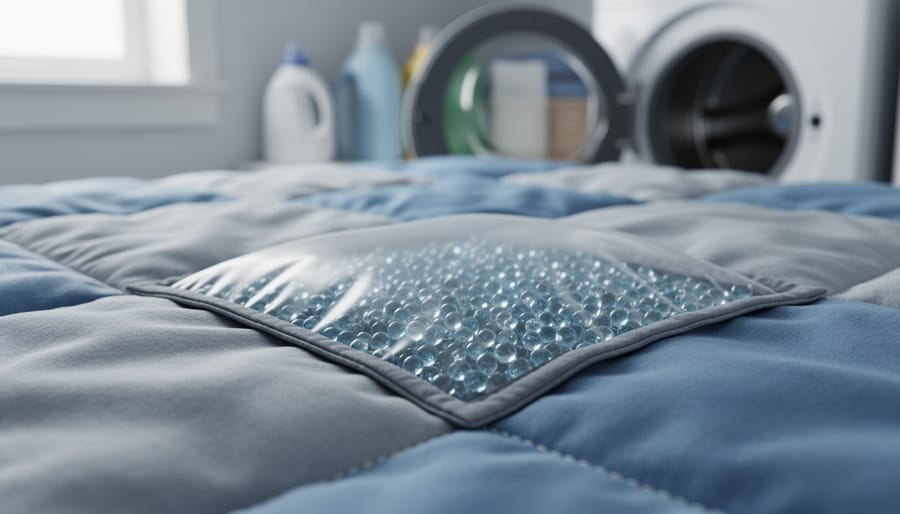
How to Wash a Weighted Blanket with Glass Beads Without Damage
Yes, you can safely machine wash most weighted blankets filled with glass beads, and doing it right protects both your investment and your washing machine. The key is checking your blanket’s weight against your washer’s capacity (most home machines handle up to 20 pounds), using cold water on a gentle cycle, and ensuring thorough drying to prevent mildew trapped inside the fill pockets.
Glass beads are actually one of the most durable fill materials when you wash weighted blankets unlike plastic poly pellets that can melt or organic fills that clump. These tiny, sand-like spheres won’t break down in water, but the real risk lies in how the blanket’s weight distributes during the wash cycle. An unbalanced load can strain your machine’s drum or cause the stitching that holds those beads in place to fail, turning your cozy sleep companion into a lumpy mess.
The anxiety around washing these blankets is completely understandable. You’ve invested anywhere from $80 to $200 in better sleep, and the last thing you want is to ruin it in one careless wash. The good news? With the right preparation and a methodical approach, you can keep your glass-bead weighted blanket fresh, clean, and fully functional for years. This guide walks you through every step, from pre-wash inspection to the final fluff test, so you can clean with confidence.
Why Glass Bead Weighted Blankets Need Special Care
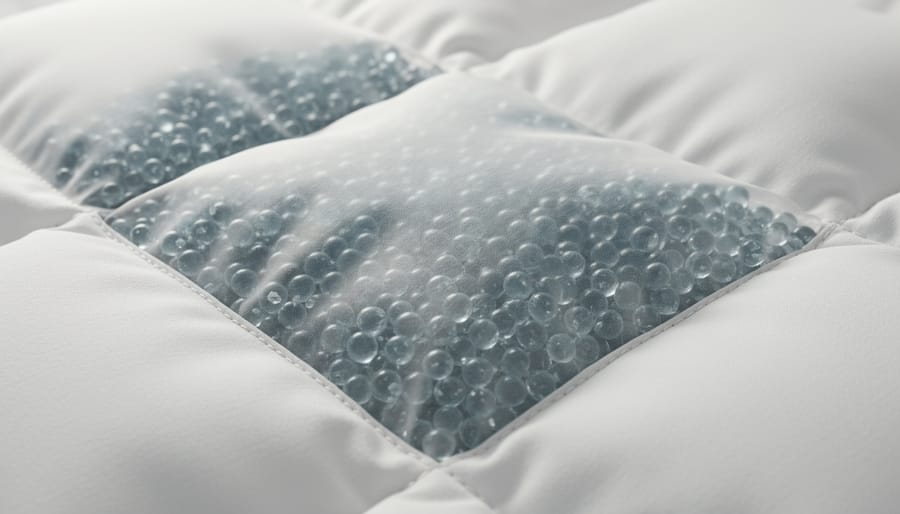
Glass bead weighted blankets occupy a sweet spot in the weighted bedding world. Their tiny, smooth beads, often smaller than a peppercorn, distribute weight evenly across quilted pockets, creating that signature gentle pressure without the bulk of larger fills. Unlike poly pellets, which can feel lumpy and shift noisily, glass beads settle quietly and maintain their position better during use. They’re also denser, so manufacturers need fewer beads to achieve the same weight, resulting in a thinner, more breathable blanket.
This durability comes with caveats. While glass beads won’t degrade or absorb moisture like some organic fills, their weight puts tremendous strain on the blanket’s fabric and stitching during washing. A 20-pound blanket becomes significantly heavier when waterlogged, and aggressive agitation can weaken seam integrity or cause the beads to punch through stressed fabric. The beads themselves are nearly indestructible, but the barrier keeping them contained isn’t.
Common mistakes compound these risks. Washing on high heat can shrink the outer fabric faster than the inner baffles, creating tension that stresses seams. Using a top-loader with a central agitator can twist the blanket violently, concentrating force on pocket corners. Overloading the machine prevents proper water circulation, leaving detergent residue that stiffens fabric over time. Some people also skip weight checks, cramming a blanket into a machine rated for half its soaked weight, which can burn out motors or crack drum bearings. Understanding these vulnerabilities shapes every decision in the washing process ahead.
What You’ll Need to Wash Your Glass Bead Weighted Blanket
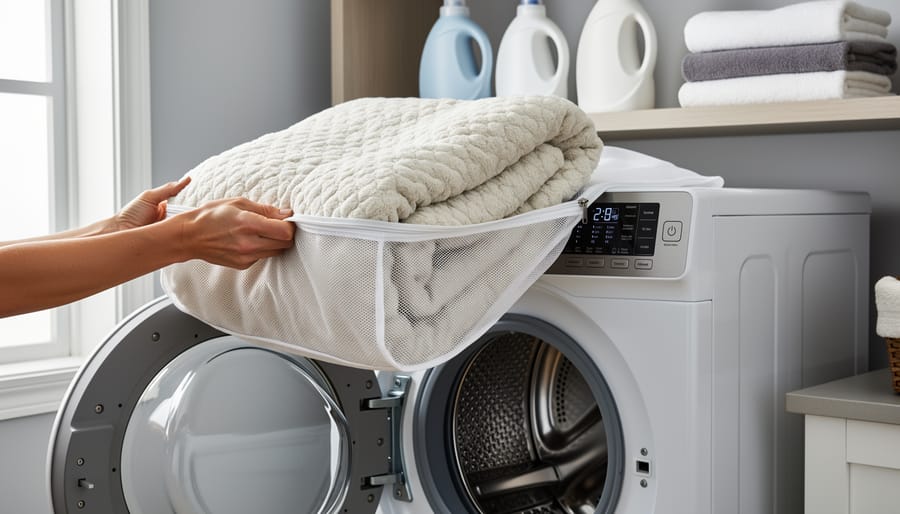
Before you start the washing process, gather everything you need to protect both your weighted blanket and your washing machine. We’ve consulted with textile care specialists to ensure these recommendations keep your glass bead blanket safe throughout cleaning.
Essential Items:
- Large-capacity washing machine (minimum 4.0 cubic feet) to accommodate the blanket’s weight without overloading
- Mild liquid detergent without bleach, fabric softeners, or harsh chemicals that can degrade stitching
- White vinegar (optional) as a natural fabric softener alternative and odor neutralizer
- Three or four tennis balls or wool dryer balls to prevent bead clumping during the drying cycle
- Access to appropriate drying space, either a large-capacity dryer or flat outdoor area for air drying
You’ll also want a removable duvet cover if your blanket doesn’t already have one. This protective layer reduces how often you need to wash the weighted blanket itself, extending its lifespan significantly.
Check your blanket’s care tag before gathering supplies. Some manufacturers include specific detergent recommendations or prohibit machine washing entirely. If your weighted blanket exceeds 20 pounds or your washer is smaller than 4 cubic feet, consider using a commercial laundromat’s industrial machines. Their higher capacity handles heavy loads without strain, reducing the risk of mechanical damage or incomplete cleaning.
Important Safety Warnings Before You Start
Before you start washing, check your machine’s weight capacity. Most home washers handle 15 to 20 pounds comfortably, but a queen-size glass bead weighted blanket can weigh 25 pounds or more when dry, and significantly more when wet. Overloading damages both the machine’s drum bearings and the blanket’s stitching.
If your blanket exceeds your machine’s capacity, take it to a commercial laundromat with heavy-duty front-loaders, or hand-wash it in a bathtub instead. Never force an oversized blanket into a machine.
Top-loading washers with center agitators are risky for glass bead blankets. The agitator’s twisting motion stresses seams and can tear fabric, allowing beads to escape into the machine’s pump. Stick with front-loaders or high-efficiency top-loaders without agitators whenever possible.
Water temperature matters more than you’d think. Hot water weakens the thread holding glass bead pockets together and can shrink certain fabrics, creating gaps where beads shift unevenly. Always use cold or warm water, never hot.
Skip the dryer entirely if your blanket has any visible damage, loose stitching, or holes. The tumbling action will worsen these issues and scatter beads throughout your dryer. Similarly, if your blanket feels unusually lumpy or if you hear loose beads rattling inside the fabric layers, that’s a sign the internal pockets are compromised. Professional cleaning is safer for compromised blankets.
How to Wash a Glass Bead Weighted Blanket: Step-by-Step
Pre-Wash Inspection and Preparation
Before you start the washing process, take five minutes to examine your weighted blanket carefully. Lay it flat on a clean surface and run your hands along every seam, checking for loose threads, small holes, or weak stitching. Pay special attention to the corners and edges where stress is greatest.
This inspection isn’t just precautionary, it’s essential. Even a tiny tear can turn into a disaster once water pressure and agitation take over. Glass beads escaping through damaged seams can clog your washing machine’s drain pump, potentially causing hundreds of dollars in repair costs. They can also create uneven weight distribution that ruins your blanket’s therapeutic benefits.
If you spot any damage, repair it with strong thread before proceeding. For minor holes, a simple whipstitch works. Larger tears need professional repair or may indicate it’s time for replacement.
Next, treat any visible stains with a gentle stain remover. Dab, don’t rub, the affected area and let it sit for ten minutes. This targeted approach means your blanket spends less time in the wash cycle overall.
Machine Washing Settings and Process
Place your glass bead weighted blanket in the washing machine alone, no other laundry. The extra weight demands dedicated machine attention, and mixing it with other items prevents proper cleaning while increasing the risk of unbalanced loads.
Select the gentle cycle and cold water setting. Cold water is mandatory because hot water can degrade the fabric and stitching over time, potentially creating weak points where glass beads might escape. Warm water works if you’re dealing with stubborn stains, but it shouldn’t be your default. The gentle or delicate cycle minimizes aggressive tumbling that could stress the seams and redistribute beads unevenly within their pockets.
Set your spin speed to the lowest option available, typically 600-800 RPM or less. High-speed spins create centrifugal force that pulls beads into corners of their compartments, making them harder to redistribute during drying. Glass beads are denser than poly pellets, so they respond more dramatically to spinning forces.
Start the cycle and let it run completely, expect 30 to 45 minutes depending on your machine. Don’t open the lid mid-cycle to check progress, as this can disrupt the balanced distribution you’ve carefully set up. If your washer signals an unbalanced load and stops, don’t restart immediately. Manually redistribute the blanket by spreading it evenly around the drum, ensuring no bunching at the bottom or sides, then resume the cycle.
Rinsing and Water Extraction
Thorough rinsing prevents detergent buildup that can stiffen the fabric and irritate skin during use. Glass bead weighted blankets require complete soap removal because residue between bead pockets creates stiff spots that compromise the blanket’s drape and comfort.
Run at least one extra rinse cycle beyond your machine’s standard setting. The weight of glass beads traps water and soap in the fabric layers, making a single rinse insufficient. Check the final rinse water through your machine’s window, if you see any suds or cloudy water, run another rinse.
For water extraction, use your machine’s lowest spin speed or select the delicate spin option. High-speed spinning forces water through seams and can stress the stitching that keeps beads contained. A gentle spin removes enough water to prevent excessive dripping without putting pressure on the bead pockets.
If your blanket feels soapy or stiff after the cycle completes, don’t proceed to drying. Instead, run one more rinse-only cycle. The extra ten minutes prevents the frustration of redoing the entire wash later.
Drying Your Glass Bead Weighted Blanket
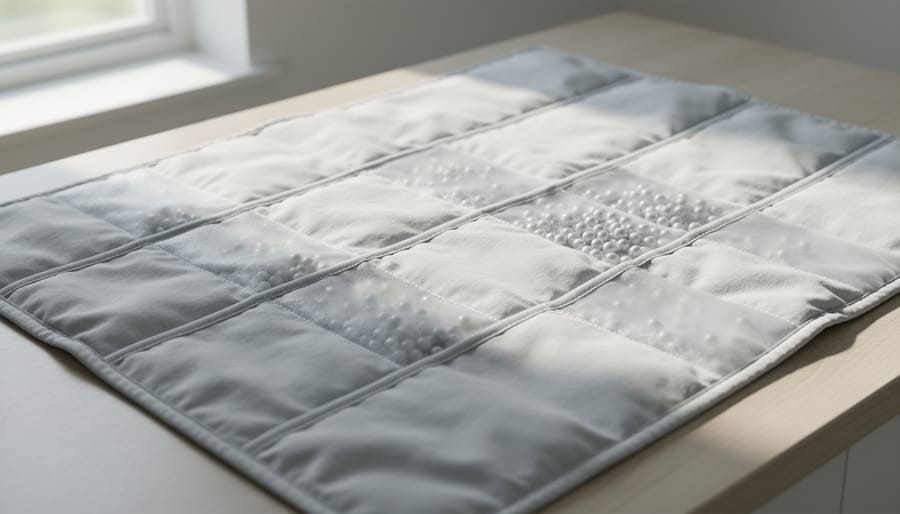
Drying deserves as much care as washing, moisture trapped in the bead compartments can breed mold and mildew, while high heat risks damaging both the fabric and any waterproof backing. You have two viable approaches: machine drying on low heat or air drying flat.
For machine drying, select the lowest heat setting or air fluff cycle. Toss in three or four clean dryer balls to help break up clumps and keep beads moving within their pockets. Run the dryer for 30 minutes, then pause to manually redistribute the beads. Reach inside and gently massage sections where beads have bunched together, coaxing them back into even distribution. Repeat this redistribution process every 30 minutes. A full dry typically takes two to four hours, depending on your blanket’s weight and your dryer’s capacity. Never use high heat, it can melt synthetic fabrics, weaken seams, and compromise waterproof linings.
Air drying takes longer but eliminates heat exposure risks. Lay the blanket flat on a clean surface outdoors or in a well-ventilated room, preferably on a drying rack or over multiple towels. Flip it every few hours and redistribute beads by hand. Full air drying requires 24 to 48 hours.
Before returning your blanket to use, press sections between your hands. You shouldn’t feel cold spots or dampness. Run your palm across the surface, beads should feel evenly distributed without heavy pockets or empty gaps. Any lingering moisture needs more drying time.
How to Know Your Blanket Is Clean and Undamaged
After drying, your weighted blanket needs a thorough inspection before you put it back on your bed. Start by feeling the entire surface, paying special attention to the seams and corners where moisture tends to linger. Any dampness can lead to mold or mildew, so if you detect wet spots, return the blanket to the dryer for another 30-minute cycle on low heat.
Run through this verification checklist to confirm your blanket is ready for use:
- Completely dry to touch in all areas, including thick seams and pocket edges
- No musty odor when you press your nose close to the fabric
- Beads evenly distributed across all pockets without clumping in corners
- Seams intact with no fraying, gaps, or weak spots
- No bead leakage or visible beads outside their designated pockets
Gently shake the blanket and listen for the distinctive sound of glass beads moving freely. If you hear beads in the wrong sections or notice heavy spots, lay the blanket flat and massage the beads back into their proper pockets. Check the weight distribution by draping it over your arms at different points. Similar to how you’d clean mattress cover items with care, handle any issues immediately to prevent long-term damage. If you spot torn seams, repair them with a needle and thread before using the blanket again.
Maintenance Tips and Next Steps
Wash your glass bead weighted blanket every three to four months under normal use. If you sweat heavily at night or have allergies, increase this to every six to eight weeks. Between full washes, protect your investment with a removable duvet cover, it acts as a barrier against body oils, dust, and spills while giving you something lightweight to launder weekly.
Spot-clean minor stains immediately using a damp cloth with mild detergent. Blot from the outside of the stain inward to prevent spreading, then air-dry the area completely. This approach handles most accidents without subjecting the entire blanket to washing stress.
Store your blanket folded loosely or rolled in a breathable cotton bag. Avoid vacuum-sealed storage, compressed glass beads can stress seams over time. Keep it in a cool, dry space away from direct sunlight, which can degrade fabric and compromise stitching.
Consider professional cleaning for blankets over 25 pounds, those with delicate covers like velvet or silk, or if your home machines can’t handle the weight safely. Commercial-grade equipment handles these challenges better than residential washers.
Poly pellet weighted blankets require gentler handling than glass beads since pellets can melt at high temperatures. Steel shot blankets often need professional cleaning due to rust concerns. Glass beads offer the most washing flexibility, which is why they’re popular for home care routines, much like when you deep clean mattress items that see daily use and need regular maintenance without professional help.
Common Questions About Washing Glass Bead Weighted Blankets
Can I hand-wash my glass bead weighted blanket instead of using a machine?
Yes, hand-washing works well for lighter blankets (under 15 pounds) or when machine capacity is an issue. Fill a bathtub with cool water and mild detergent, submerge the blanket, gently agitate by pressing down repeatedly, then drain and refill for rinsing, but be prepared for the physical effort of lifting and wringing a water-saturated weighted blanket.
What if my weighted blanket is too heavy for my washing machine?
Most home washers handle blankets up to 20-25 pounds when dry, but check your manual for the exact weight limit. If yours exceeds capacity, take it to a laundromat with commercial front-loading machines rated for larger loads, or use a professional cleaning service that specializes in bedding.
Can I use bleach or fabric softener when washing?
Skip both. Bleach can weaken the fabric and stitching that holds bead pockets in place, while fabric softener leaves residue that reduces breathability and can make the blanket feel heavy or stiff rather than soft.
Why do the glass beads clump together after washing?
Clumping happens when beads shift into corners during the wash cycle or when the blanket isn’t dried thoroughly with periodic redistribution. High heat also causes the fill to migrate, which is why low-temperature drying with frequent fluffing prevents this issue.
If you discover uneven bead distribution after your blanket dries, lay it flat on your bed and gently massage the fabric to work beads back into their designated pockets. Shake the blanket from different corners, holding it vertically to encourage gravity-assisted redistribution. For stubborn clumps, you can run the blanket through a no-heat air fluff cycle in the dryer for 10-15 minutes, pausing every few minutes to manually spread the beads. This method works because glass beads are rigid and won’t compress permanently like some synthetic fills.
The key to avoiding redistribution problems in future washes is using the lowest spin speed your machine offers and never overloading the drum. When a weighted blanket has room to move freely during the wash, beads stay more evenly distributed throughout the process. You’ll also want to avoid bunching or folding the blanket when transferring it from washer to dryer, carry it fully spread out or supported underneath to maintain even weight distribution.